
QUT Professor Endorses UK Push To Create Smokefree Generations
QUT Media4th November 2025 The United Kingdom Parliament is considering a bill aimed at making smoking obsolete, which has been

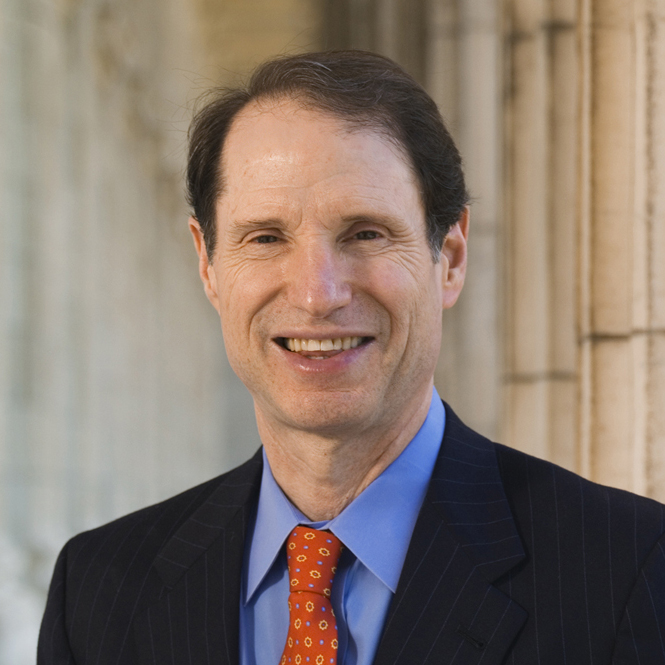 Senator Wyden has again written the Obama Administration insisting that ACTA cannot be implemented in the United States absent Congressional ratification. In a letter to State Department Attorney Harold Koh, he disagrees with Koh’s previous assertion that the Pro IP act allows the Administration to bypass Congress. He notes that the Administration had originally offered a different justification for why ACTA would not require the normal legislative approval (that ACTA is a “sole executive agreement rather than a formal trade agreement). Finally, he asks if the Administration applies the Pro IP Act reasoning to the cybersecurity bill currently before the Senate, S. 3414.
Wyden writes:
I strongly disagree with any contention that the Pro IP Act of 2008 authorized the President to negotiate and enter the United States into binding international agreements on intellectual property without Congress’ ratification of such agreement. If Congress wanted to authorize the Executive Branch to take such actions it would have said so explicitly, particularly given that ACTA negotiations were well underway before the Pro IP Act of 2008 was enacted into law.
Sean Flynn offered the following statement on the Wyden letter:
Senator Wyden is absolutely correct, and in accord with the views of 50 law professors in a recent letter to the Senate (see http://infojustice.org/archives/23390), that Congress did not authorize binding the U.S. to ACTA without Congressional consent in the PRO IP Act. The PRO-IP Act did not authorize ACTA for two reasons. First, the Act was passed after the ACTA negotiation started. And second, the Act only authorized a “plan” to coordinate with other countries. It did not delegate Congress’s authority to approve international agreements to the President. As of yet, the U.S. lacks a plan to constitutionally enter ACTA.

QUT Media4th November 2025 The United Kingdom Parliament is considering a bill aimed at making smoking obsolete, which has been
Speaking at the Global Expert Network on Copyright User Rights Symposium on 16 June 2025, Professor Christophe Geiger argues for
On 25 September 2025, Professor Wend Wendland, delivered the 14th Peter Jaszi Distinguished Lecture at American University in Washington D.C..
On September 18, 2025, the Italian Senate definitively approved the country’s first comprehensive framework law on artificial intelligence (AI). The
Por Andrés Izquierdo Durante la segunda semana de agosto, fui invitado a hablar en la Feria Internacional del Libro de
By Andrés Izquierdo AI, Copyright, and the Future of Creativity: Notes from the Panama International Book FairDuring the second week