
QUT Professor Endorses UK Push To Create Smokefree Generations
QUT Media4th November 2025 The United Kingdom Parliament is considering a bill aimed at making smoking obsolete, which has been

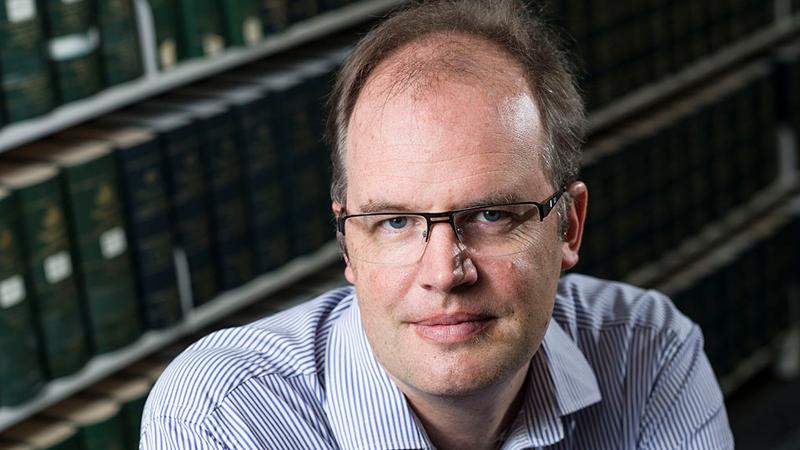
QUT’s leading legal expert on the Trans Pacific Partnership says the deal has profound impacts for Australia but warns settlement of cross-border disputes by an international tribunal remains controversial.
Professor Matthew Rimmer, from QUT’s Faculty of Law, said it had taken more than a decade to do but today the Australian Senate passed the legislation by 33 votes to 15.
“The most controversial issues remained investor-state dispute settlement, labour rights, health care and the protection of the environment,” Professor Rimmer said.
The TPP deal, which had originally included the United States and Canada, was reported to strip 98 per cent of tariffs for the 11 membership countries.
“The Coalition maintains the agreement benefits agriculture, mining and trade in services,” Professor Rimmer said.
Australia is the fourth country to ratify the deal after Mexico, Japan and Singapore. For the deal to enter into force globally, two more nations need to ratify the agreement.
Professor Rimmer said debate was continuing in Vietnam and Malaysia but should be the next two nations to endorse the free trade accord.
The trade deal would then come into force between member countries from 2019.
“The past month has been a watershed moment in international trade law, with critical developments in respect of mega-regional agreements in the Pacific Rim, North America, Great Britain and the European Union,” he said.
“The United States-Mexico-Canada Free Trade Agreement will certainly have ramifications for the TPP, especially given how it has affected Mexico and Canada.
Professor Rimmer said the big question remained as to whether the US re-joined the TPP at a later date.
“If so, there will be significant questions as to whether suspended provisions in the Trans-Pacific Partnership will be revived, particularly relating to intellectual property such as copyright law, patent law, and biologics, and investment,” he said.
Professor Rimmer is a top researcher from QUT’s Intellectual Property and Innovation Law Research Program which is focused on intellectual property, international trade, economic globalisation and public policy.
He is available for media requests.
Media contacts:
media@qut.edu.au
After hours: Rose Trapnell, 0407 585 901
https://www.qut.edu.au/news?id=137111

QUT Media4th November 2025 The United Kingdom Parliament is considering a bill aimed at making smoking obsolete, which has been
Speaking at the Global Expert Network on Copyright User Rights Symposium on 16 June 2025, Professor Christophe Geiger argues for
On 25 September 2025, Professor Wend Wendland, delivered the 14th Peter Jaszi Distinguished Lecture at American University in Washington D.C..
On September 18, 2025, the Italian Senate definitively approved the country’s first comprehensive framework law on artificial intelligence (AI). The
Por Andrés Izquierdo Durante la segunda semana de agosto, fui invitado a hablar en la Feria Internacional del Libro de
By Andrés Izquierdo AI, Copyright, and the Future of Creativity: Notes from the Panama International Book FairDuring the second week