
QUT Professor Endorses UK Push To Create Smokefree Generations
QUT Media4th November 2025 The United Kingdom Parliament is considering a bill aimed at making smoking obsolete, which has been

Professor Eva Hemmungs Wirten
QUT Intellectual Property and Innovation Law Research Program
Wed, July 10, 2019
5:30 PM — 7:00 PM AEST
Location
The Gibson Room (Z1064)
QUT
Gardens Point Campus
Brisbane, Queensland 4000
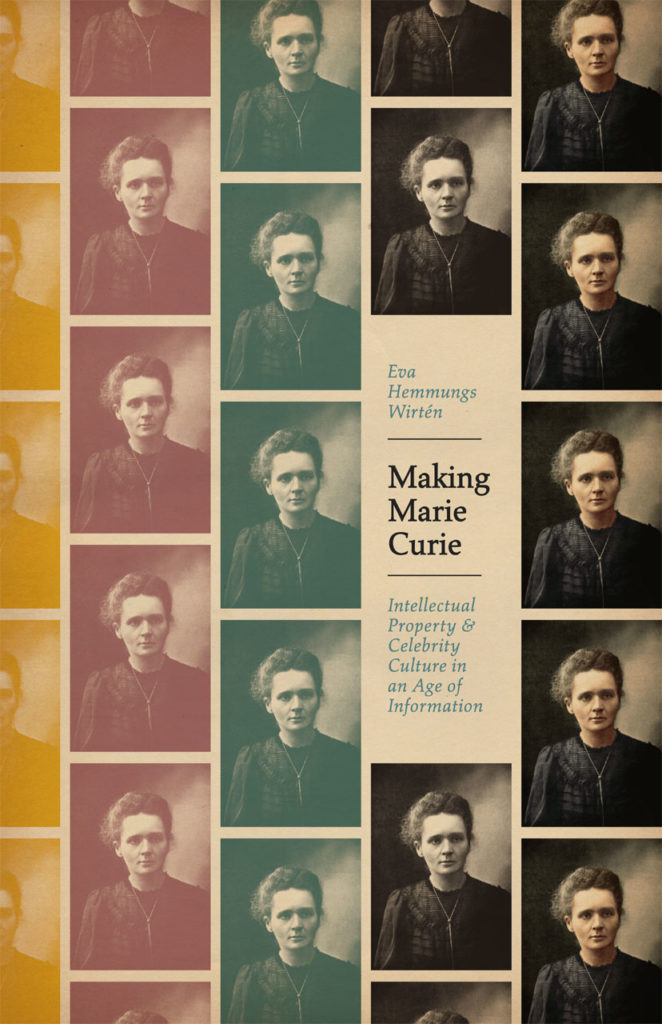
Making Marie Curie: Intellectual Property and Celebrity Culture in an Age of Information
Professor Eva Hemmungs Wirten
Abstract
In many ways, Marie Curie represents modern science. Her considerable lifetime achievements — the first woman to be awarded a Nobel Prize, the only woman to be awarded the Prize in two fields, and the only person to be awarded Nobel Prizes in multiple sciences — are studied by schoolchildren across the world. When, in 2009, the New Scientist carried out a poll for the “Most Inspirational Female Scientist of All Time,” the result was a foregone conclusion: Marie Curie trounced her closest runner-up, Rosalind Franklin, winning double the number of Franklin’s votes. She is a role model to women embarking on a career in science, the pride of two nations — Poland and France — and, not least of all, a European Union brand for excellence in science.
Making Marie Curie explores what went into the creation of this icon of science. It is not a traditional biography, or one that attempts to uncover the “real” Marie Curie. Rather, Eva Hemmungs Wirtén, by tracing a career that spans two centuries and a world war, provides an innovative and historically grounded account of how modern science emerges in tandem with celebrity culture under the influence of intellectual property in a dawning age of information. She explores the emergence of the Curie persona, the information culture of the period that shaped its development, and the strategies Curie used to manage and exploit her intellectual property. How did one create and maintain for oneself the persona of scientist at the beginning of the twentieth century? What special conditions bore upon scientific women, and on married women in particular? How was French identity claimed, established, and subverted? How, and with what consequences, was a scientific reputation secured?
Biography
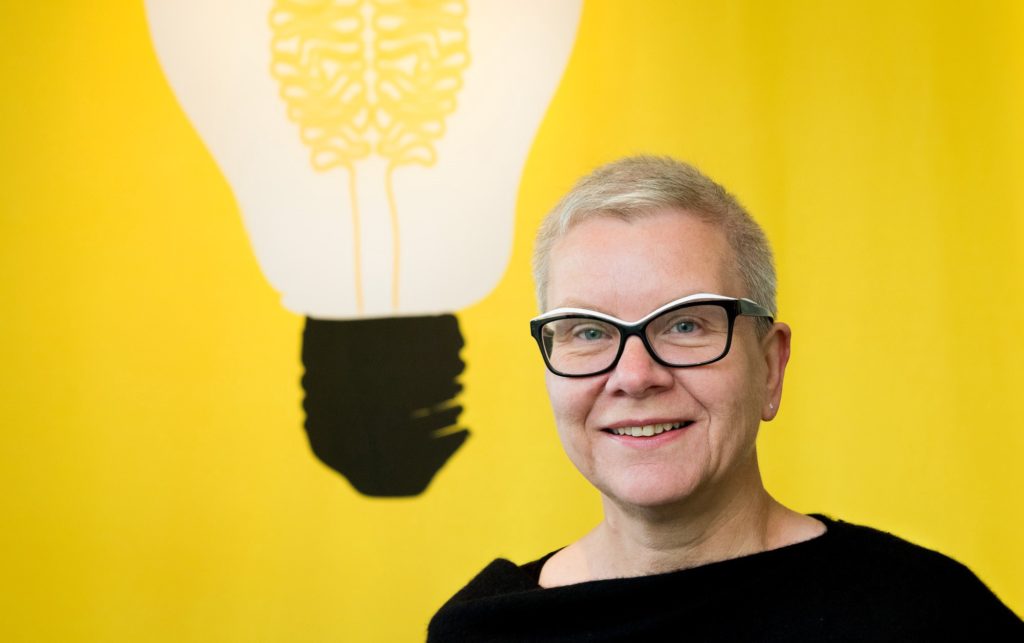
Eva Hemmungs Wirtén is Professor of Mediated Culture at the Department of Social Change and Culture, Linköping University, Sweden, and also Co-Director of The International Society for the History and Theory of Intellectual Property (ISHTIP). She has written extensively on the cultural history of international copyright, the public domain and, more recently, on patents as documents. Her most recent book, Making Marie Curie: Intellectual Property and Celebrity Culture in an Age of Information was published by University of Chicago Press in 2015. In 2017, she was awarded an ERC Advanced Investigator Grant for the project “Patents as Scientific Information, 1895–2020,” (PASSIM www.passim.se), which runs between 2017–2022. Her first article in the PASSIM-project, “How Patents Became Documents, or Dreaming of Technoscientific Order, 1895–1937,” was published by Journal of Documentation in an earlycite version in March 2019 and can be downloaded as OA via https://doi.org/10.1108/JD-11-2018-0193.
[/et_pb_text][/et_pb_column] [/et_pb_row] [/et_pb_section]
QUT Media4th November 2025 The United Kingdom Parliament is considering a bill aimed at making smoking obsolete, which has been
Speaking at the Global Expert Network on Copyright User Rights Symposium on 16 June 2025, Professor Christophe Geiger argues for
On 25 September 2025, Professor Wend Wendland, delivered the 14th Peter Jaszi Distinguished Lecture at American University in Washington D.C..
On September 18, 2025, the Italian Senate definitively approved the country’s first comprehensive framework law on artificial intelligence (AI). The
Por Andrés Izquierdo Durante la segunda semana de agosto, fui invitado a hablar en la Feria Internacional del Libro de
By Andrés Izquierdo AI, Copyright, and the Future of Creativity: Notes from the Panama International Book FairDuring the second week