
QUT Professor Endorses UK Push To Create Smokefree Generations
QUT Media4th November 2025 The United Kingdom Parliament is considering a bill aimed at making smoking obsolete, which has been

QUT News
26th September 2024
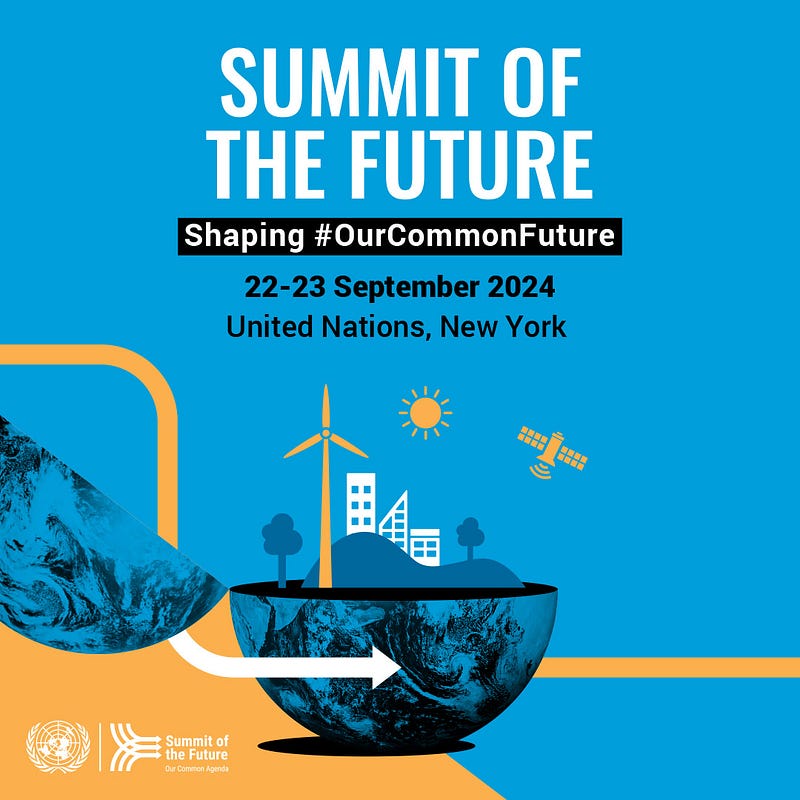
Australia could boost funding to transfer sustainable technology to developing countries and make technology and data open and accessible to help implement the UN Pact for the Future, QUT Intellectual Property and Innovation Law Professor Matthew Rimmer said.
Australia’s support for the new UN Pact for the Future and its sustainable development focus must include boosted funding to share technology and research with developing nations.
Professor Rimmer said the Pact for the Future was adopted at the UN’s Summit of the Future this month. The Pact for the Future is to be reviewed by Federal Parliament’s Joint Standing Committee on Treaties.
“The Pact calls for the sharing of science benefits to not leave billions of people in the least developed nations behind,” Professor Rimmer said.
“The Pact’s ethos is to ensure that ‘innovations and scientific breakthrough that can make our planet more sustainable and our countries more prosperous and resilient should be affordable and accessible to all’.
“It has a strong focus on open innovation, open education, and open data in the Pact for the Future, and the accompanying Global Digital Compact.”
Professor Rimmer, from QUT’s School of Law, researches intellectual property and its impacts on sustainable development and is co-editor of the newly released The Elgar Companion to Intellectual Property and the Sustainable Development Goals, which covers the full gamut of issues discussed at the Summit of the Future.
He said that despite Russia’s surprise effort to delay the Pact’s adoption, (which most nations rejected), it was adopted with a focus to raise funds for research, development, and deployment of sustainable innovation.
“The Pact calls upon developed nations to accelerate the transfer of environmentally sound technologies on favourable terms with assistance to adapt the innovations to local needs and circumstances.
“It also highlights the importance of Indigenous intellectual property and the need to ‘protect, build on and complement Indigenous, traditional and local knowledge’.
Professor Rimmer said Foreign Minister Penny Wong led the Australian delegation to the Summit where she supported the Pact for the Future.
“She said that reform of the UN system was needed, and Australia was committed to being a constructive and engaged partner in this process, advocating for our region and responding to the needs of developing countries.
“In her speech to the Summit for the Future, Minister Wong also promised to replenish the Asian Development Fund to aid the region’s most vulnerable nations.
“She said Australia would offer Climate Resilient Debt Clauses in our sovereign loans by the end of 2025 to help developing countries build economic resilience in the face of climate change and other shocks.
“Minister Wong told the Summit said that Australia would build sustainable south-south connectivity via submarine cables across the Pacific and Timor-Leste.”

QUT Media contact:
Niki Widdowson, 07 3138 2999 or n.widdowson@qut.edu.au.
After hours: 0407 585 901, media@qut.edu.au
Niki Widdowson, ‘Global Benefits Flow When Innovation Shared’, QUT News, 26 September 2024, https://www.qut.edu.au/news?id=196851

QUT Media4th November 2025 The United Kingdom Parliament is considering a bill aimed at making smoking obsolete, which has been
Speaking at the Global Expert Network on Copyright User Rights Symposium on 16 June 2025, Professor Christophe Geiger argues for
On 25 September 2025, Professor Wend Wendland, delivered the 14th Peter Jaszi Distinguished Lecture at American University in Washington D.C..
On September 18, 2025, the Italian Senate definitively approved the country’s first comprehensive framework law on artificial intelligence (AI). The
Por Andrés Izquierdo Durante la segunda semana de agosto, fui invitado a hablar en la Feria Internacional del Libro de
By Andrés Izquierdo AI, Copyright, and the Future of Creativity: Notes from the Panama International Book FairDuring the second week