Category Academic Resources

Video: PROF. SEAN FLYNN GIVES A CONCEPTUAL OVERVIEW OF RESEARCH AS A HUMAN RIGHT IN INTERNATIONAL COPYRIGHT

Interested in learning more about research as a human right? In this informative video, Professor Flynn gives a conceptual overview of research as a human right in international copyright.  Further, he sheds light on the human rights aspect of the right to research and how it differs from a type of exception to copyright.  He continues to flush out how human rights duties are imposed by the state to act or refrain from acting in certain ways. He uses censorship as an example of a state affirmative action that reduces people's access to their right to research.

A Right to Research in Africa

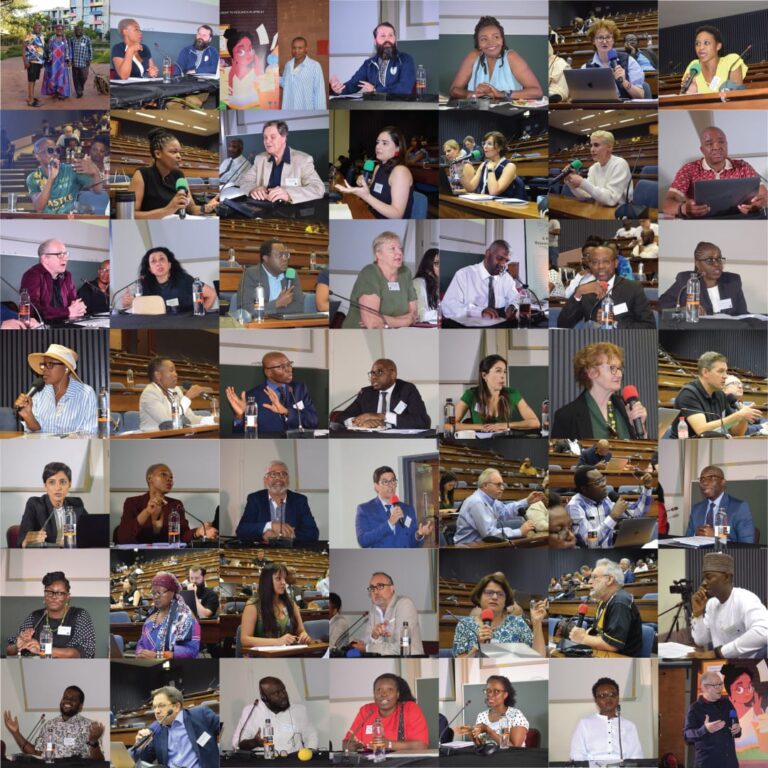
[Sean Flynn] The Right to Research in International Copyright Project hosted a week of conferences in South Africa, January 23-27, 2023. The week of public and private meetings in Pretoria and Cape Town featured discussions of how African researchers are using modern digital technologies to address a range of pressing research questions that require use of research exceptions in copyright law. Academics, practicing lawyers and government officials from several African countries provided the legal and policy context for the researchers’ work, illuminating both the flexibility in many African laws that permit research uses, as well as  where changes in domestic and international law could serve the public interest. 

The Hidden Cost of University Patents

[C.J. Ryan, W. Michael Schuster, and Brian L. Frye] Abstract: Universities are encouraged to undertake research through grants from government agencies, foundations, and other organizations. The Bayh-Dole Act reinforces this incentive structure by allowing universities to take ownership of the resultant patents. Included in these rights is the ability to generate income by licensing patents and bringing patent infringement lawsuits. Undoubtedly, exercising these rights to financially benefit the university is economically rational. But might such actions also impose a cost on the public despite the fact that these very patents arose from public research subsidies?

UK Government Axes Plans to Broaden Existing Text and Data Mining Exception

[Eleonora Rosati]... In mid-2022, the UK Intellectual Property Office (IPO) announced that Government would consider broadening the scope for unlicensed TDM activities and introduce a new E&L that would allow TDM for any purpose (including commercial TDM), subject to a lawful access requirement to the relevant copyright works and other protected subject-matter. The latest news, however, is that such a reform will not go ahead. Indeed, yesterday the UK Minister for Science, Research and Innovation confirmed that any such plans have now been axed...

Open Educational Resources through the European Lens: Pedagogical Opportunities and Copyright Constraints

[Giulia Priora and Giovanna Carloni] Abstract: The adoption of Open Educational Resources (OERs) in schools and universities is a phenomenon on the rise also in Europe. Increasingly relying on digital, open, freely adaptable materials that are specifically designed for educational purposes is not only a response to the disruptions brought by the Covid-19 pandemic, but a consistent policy step towards a more inclusive, diverse, and quality education in the EU. The article examines the potential and constraints of OERs from both a pedagogical and legal perspective.

Reconceptualizing Open Access to Theses and Dissertations

[Orit Fischman Afori and Dalit Ken-Dror Feldman] ... The modern perception of TD has generated a call for their greater accessibility, as part of the Open Science movement. Nevertheless, in many countries around the world TD are not published in an open access format. While the normative basis for open access approach to publicly funded academic research is extensively discussed in the literature, there is a lack of legal and normative discussion concerning the special case of TD. The present study aims at filling this gap. We argue that the essence of TD as unique outputs of academic research merits a special stance compelling the publication of these studies in open access format, subject to certain exceptions.

Trade Secrets in Biologic Medicine: The Boundary with Patents

[Robin Feldman] Abstract: ... There is a dearth of legal literature on the topic of trade secrets in the biologic space and almost nothing regarding how trade secrets interact with the patent system in that domain. These scientific and legal areas are sufficiently complex that even the most intrepid scholars fear to tread. This article explains in detailed and accessible language how the systems are working together to the detriment of society. To address the problem, this article argues that a company receiving a patent on a drug product should be required to disclose the full range of trade secrets necessary to make that drug.

The Right to Repair, Competition, and Intellectual Property

[Michael Carrier] Abstract: Manufacturers have made it difficult for consumers to repair their products. And they have justified their restrictions in large part by claiming the need to protect their intellectual property (IP). This essay explains how justifications based on IP--in particular, copyrights, design patents, trademarks, and trade secrets--are not persuasive.

A Week of Events on Copyright and Access to Knowledge in South Africa

[PIJIP] A coalition of academic and civil society organizations are co-organizing a week of debates on copyright and access to knowledge in South Africa, beginning on January 23rd. The organizers for these events are American University's PIJIP, the University of Pretoria's Future Africa, the University of Cape Town IP Unit, the Strathmore University Centre for Intellectual Property and Information Law, the South Centre, Electronic Information for Libraries, Masakhane and the Wikimedia Foundation.

Mechanical Licenses for Video Games

[Lukas Ruthes Gonçalves] Abstract: Mechanical licenses are a scheme used in the music industry to not only allow publishers and songwriters to be compensated for their work, but also to allow this important cultural product to be better distributed in society and not get lost in time. Video games have accrued great importance culturally, but are at an increasingly greater risk of vanishing, due to being locked into a certain hardware. Allowing fans and other creators to utilize mechanical licenses to remake their favorite video games would help preservation efforts and serve as a reliable income stream for its original publisher.

Compelling Trade Secret Transfers

[David S. Levine and Joshua D. Sarnoff] Abstract: The unprecedented COVID-19 virus has brought to the forefront many challenges associated with exclusive rights in information, data, and know-how, all of which may constitute protected trade secrets. While patents have received more attention, trade secret information has limited the ability to perform research, develop, test, gain regulatory approval for, manufacture, and distribute globally and at sufficient scale and affordable prices the needed vaccines, therapeutics, diagnostics, medical devices, and personal protective equipment. Voluntary licensing efforts have proven inadequate to supply pandemic needs. Thus, compelling the transfer or licensing of trade secrets is needed to properly address COVID-19, but more importantly, to address future pandemics and other serious global problems such as climate change.

Monopolising Trash: The Critical Analysis of Upcycling under Finnish and EU Copyright Law

[Péter Mezei and Heidi Härkönen] Abstract: Exhaustion is a fundamental doctrine of copyright law, allowing for the resale of lawfully acquired copies of protected subject matter without prior authorization and payment to the rightholder. Following the debates on parallel importation, freedom of movement of goods, property rights v. copyright, and, most recently, resale of digital files, it is time to assess the relevance of the doctrine for a sustainable economy. More precisely, this paper addresses whether upcycling (transformative redistribution of materials based on the use of pieces/copies of, inter alia, works of authorship) fits into the doctrine of exhaustion.