
QUT Professor Endorses UK Push To Create Smokefree Generations
QUT Media4th November 2025 The United Kingdom Parliament is considering a bill aimed at making smoking obsolete, which has been

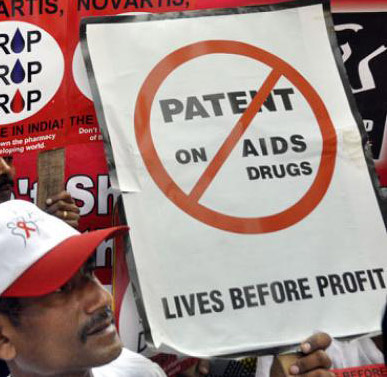 On Wednesday, the Indian Supreme Court will hear arguments in Novartis’ challenge to India’s patent law. In 2006, the Indian Patent Office rejected Novartis’ patent application for the cancer drug Glivec (imatinib mesylate), saying that the drug was a new salt formulation of a known drug, and therefore unpatentable under Indian Law. Section 3(d) of the Indian Patents Act specifies that patents cannot be granted for “the mere discovery of a new form of a known substance which does not result in the enhancement of the known efficacy of that substance…” Novartis has asked that court to endorse a broad interpretation of the word “efficacy” that would include its product.
Public health NGOs have warned that the Indian generic industry – which provides the vast majority of medicines taken by people in the developing world, including antiretrovirals for HIV/AIDS – relies on the flexibility of Indian patent law. They have urged Novartis to drop the case. Leena Menghaney from Médecins Sans Frontières told the Globe and Mail that “if the Supreme Court broadens the way ‘efficacy’ is interpreted, it will open a flood of patents. It’s not just a cancer drug. Everyone else will be stuck with that decision.”
A good description of 3(d) is presented by Shamnad Basheer & T. Prashant Reddy in The “Efficacy” of Indian Patent Law: Ironing out the Creases in Section 3(d).
For more on the case, see MSF’s “Drop the Case” page. For the other side, see Novartis’ page on the case.

QUT Media4th November 2025 The United Kingdom Parliament is considering a bill aimed at making smoking obsolete, which has been
Speaking at the Global Expert Network on Copyright User Rights Symposium on 16 June 2025, Professor Christophe Geiger argues for
On 25 September 2025, Professor Wend Wendland, delivered the 14th Peter Jaszi Distinguished Lecture at American University in Washington D.C..
On September 18, 2025, the Italian Senate definitively approved the country’s first comprehensive framework law on artificial intelligence (AI). The
Por Andrés Izquierdo Durante la segunda semana de agosto, fui invitado a hablar en la Feria Internacional del Libro de
By Andrés Izquierdo AI, Copyright, and the Future of Creativity: Notes from the Panama International Book FairDuring the second week