
QUT Professor Endorses UK Push To Create Smokefree Generations
QUT Media4th November 2025 The United Kingdom Parliament is considering a bill aimed at making smoking obsolete, which has been

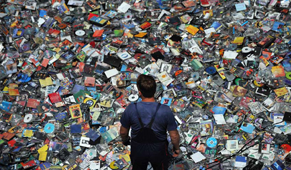 Today at New York University I will be participating in the official launch of the multi-year multi-country study of Media Piracy in Emerging Economies (http://piracy.ssrc.org), edited by Joe Karaganis at SSRC. Mike Palmedo and I contributed to the report, in particular in its second chapter exploring Networked Governance and the United States Trade Representative.
The report signals that the public interest analyses of the globalization of intellectual property of the “access to medicines” and “access to knowledge” wings of the public interest intellectual property movements have converged. The analysis shows that in media and software markets intellectual property monopolies in middle income countries with high wealth inequality promote exclusionary pricing that public policies must respond to if we are to maximize global social welfare.
The pricing problem has been long recognized with respect to the case of medicines. Witnessing global distribution of essential AIDS treatments at the same high price (over $10,000 /year) throughout the globe, from Uganda to the U.S., stoked an international outcry. In response, the Doha Declaration on TRIPS and Public Health, and many other global public statements, promoted broader use of intellectual property “flexibilities” in developing countries to ensure access to patented medicines. In medicines at least, the dominant global discourse has shifted from promotion of a one-size-fits all patent policy to broad acceptance that poorer countries need different policy tools to avoid pricing themselves out of access to basic health goods. But there has not yet been a similar shift in the copyright field.
The newly released SSRC report shows that the same dynamics plague global media markets:
Media piracy . . . is probably better described as a global pricing problem. High prices for media goods, low incomes, and cheap digital technologies are the main ingredients of global media piracy. If piracy is ubiquitous in most parts of the world, it is because these conditions are ubiquitous. Relative to local incomes in Brazil, Russia, or South Africa, the price of a CD, DVD, or copy of Microsoft Office is five to ten times higher than in the United States or Europe. Licit media goods are luxury items in most parts of the world, and licit media markets are correspondingly tiny. Industry estimates of high rates of piracy in emerging markets—68% for software in Russia, 82% for music in Mexico, 90% for movies in India—reflect this disparity and may even understate the prevalence of pirated goods.
The economic explanation for this observance in medicine and media markets is the same. In middle income countries, there tends to be a small elite of 5% or 10% of the population that is integrated into global economies and is paid on an internationally competitive – first world – scale. But the much larger majority normally earn incomes nowhere near their first world counterparts. Because the income difference between the wealthiest tenth or so of the population and the remaining segments is so extreme, a monopoly that has freedom to price to the most profitable segment of the demand curve will target the absolute highest income earners – those making the rough equivalent of first world salaries. In Brazil and South Africa, for example, the top 10% of income earners makes about the same as the median U.S. earner and four times that of the next highest decile. That means that if both segments are willing to pay roughly the same percentage of income on a good, a supplier would have to reduce its price to a quarter of that which could be charged the top earners but its sales would only double. That is a money losing venture, which is why it does not happen. Instead, copyrighted music CDs, like patented medicines, are sold in rich and poor countries at uniform prices. In rich countries, those prices are accessible to the majority. But in poor countries they exclude all but the elite.
Exclusionary pricing promotes piracy. As long as IP protected goods – whether they be medicines or media products – are priced in middle income countries as luxury goods affordable only to the rich, there will be a strong pull of the majority of consumers toward competitively produced products. Those competitive products can either be sold legally, if policy intervenes to force competition (e.g. through compulsory licenses), or illegally, through piracy and infringement. The more the legal regime makes it impossible to sell legal competing products, the more illegal suppliers will fill the void. In this sense, an IP maximalist agenda and the goal of eradicating all forms of IP “piracy” in middle income countries are at odds.
The chapter that Mike Palmedo and I helped to draft explains how the last 20 years of policy making on international intellectual property at the United States Trade Representative’s office has been captured by a concentrated group of interests representing the major content producers. Policy making at USTR, particularly through the Special 301 program that unilaterally threatens and sanctions countries for not adhering to USTR IP policies, has become an example of “networked governance.” The term is meant to signify that policymaking and enforcement activities have become spread out through a range of corporate and private institutions in symbiotic relationships. The industry relies on USTR to globalize policies. USTR relies on industry to fill its need for information and policy direction.
The current dominant trend produced through Special 301 and a host of other international norm setting activities led by the USTR and industry is toward an “enforcement agenda.” The goal of the agenda is escalating penalties, trials and seizures for IP violations. But the MPEE report demands that we ask: what happens if the agenda succeeds? What takes the place of pirated products when the licit goods refuse to supply the entire market? How should the globalization of intellectual property standards be met with the a set of policy tools to ensure that the result is not a highly stratified global market in which only the top 10 percent or less of the world’s consumers can afford access to knowledge, culture and their products?
Answering these questions is the subject of a current set of discussions now taking place in universities, NGO offices and the trade and cultural ministries of developing countries. The goal is to create a “positive agenda” that addresses the real problem in IP markets of exclusionary pricing that the enforcement agenda masks. And increasingly, that discussion is being taken to USTR and other leaders of the enforcement agenda.
In the current Special 301 process, USTR has announced that it will report on a set of best practices around the globe on intellectual property matters. Given the strong pull of networked governance with the content industry, the practices it reports to be “best” will likely look like the same one-size-fits-all IP policies that are producing the piracy it claims to want to combat. But public interest advocates have asked it to consider a broader range of policies that respond to, instead exacerbate, exclusionary pricing of IP-protected goods. Some of these policies, especially for middle income countries where pricing problems are most severe, might include:

QUT Media4th November 2025 The United Kingdom Parliament is considering a bill aimed at making smoking obsolete, which has been
Speaking at the Global Expert Network on Copyright User Rights Symposium on 16 June 2025, Professor Christophe Geiger argues for
On 25 September 2025, Professor Wend Wendland, delivered the 14th Peter Jaszi Distinguished Lecture at American University in Washington D.C..
On September 18, 2025, the Italian Senate definitively approved the country’s first comprehensive framework law on artificial intelligence (AI). The
Por Andrés Izquierdo Durante la segunda semana de agosto, fui invitado a hablar en la Feria Internacional del Libro de
By Andrés Izquierdo AI, Copyright, and the Future of Creativity: Notes from the Panama International Book FairDuring the second week