QUT Professor Endorses UK Push To Create Smokefree Generations
QUT Media4th November 2025 The United Kingdom Parliament is considering a bill aimed at making smoking obsolete, which has been

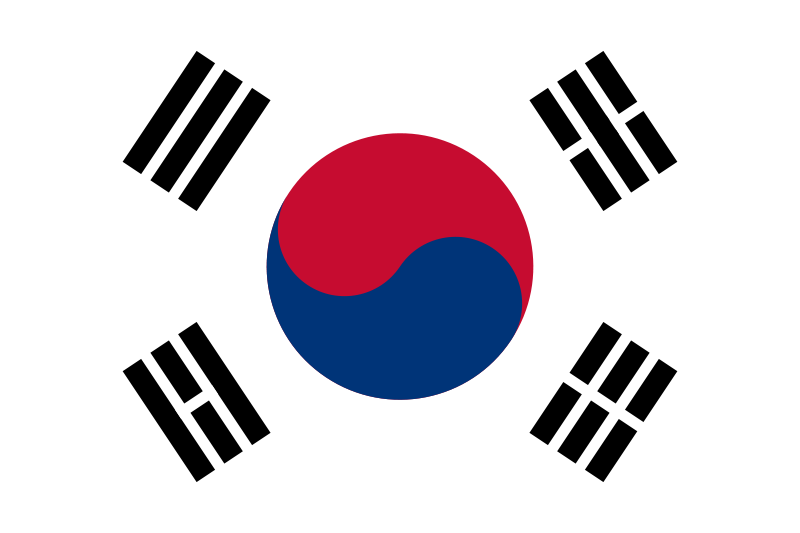 The approach to copyright limitations and exceptions differs significantly in each country depending on what models they are following. Generally speaking, there are three models of limitations and exceptions to copyright[1]: 1) the U.S. fair use model, 2) the fair dealing model in most U.K Commonwealth and Continental European countries, and 3) a combination of the U.S. and European models found in recently amended Korean Copyright Act.[2]
The U.S. fair use system allows for open-ended lists of permissible use based on statutory factors[3] that leave the task of identifying each case of exempted unauthorized use to the courts. On other hand, the Continental European countries provide a closed catalog of defined copyright limitations and exceptions. The newly amended Korean Copyright Act offers both 1) a closed list of permissible use (as with the European model) and 2) an open-ended consideration based on statutory factors (as with the U.S. model).
Article 9(2) of the Berne Convention[4], as known as the three-step test, states that copyright limitations are permissible in “certain special cases” that “do not conflict with the normal exploitation” and “do not unreasonably prejudice the legitimate interest of the author.”
There is a debate whether the three-step test is primarily designed to be restrictive to copyright limitations and exceptions or meant to be open and flexible.[5] Some scholars argue that a national fair use system did not qualify as a “certain special cases” as enumerated in the three-step test.[6] On the same line of thought, some contend that the three-step tests limits the freedom of national legislators to legislate with expectations of economics and social welfare uncertainty, particularly with the fast-changing dynamics of technological process.[7]
However, the new amendment to the Korean Copyright Act, Article 35-3.1, states that works not falling into enumerated categories may be used in cases where “there is no conflict with the normal exploitation of copyrighted work and does not prejudice the legitimate interest of the copyright holder.” The South Korean legislators suggested that this language provides the general guideline for determining whether a particular use falls under fair use.[8] Then Article 35-3.2 provides four statutory factors to determining whether a particular use is fall in to this exception, which are almost the same assertion 107 of the U.S. Copyright Act.
Therefore, this new South Korean copyright registration shows that it is not impossible to incorporate the three-step test with an open and flexible fair use clause. The South Korea fair use provision has clearly provided an enumerated list of permissible uses with the specific language from the three-step test, and then also provided flexibility by an open-ended list of permissible uses based on statutory factors when such uses are not found in the enumerated categories. This new South Korean fair use amendment challenges the theory that the three-step test is primarily designed to restrict this kind of copyright limitation.
[1] See Seagull Haiyan Song, Revaluating Fair Use in China – A Comparative Copyright Analysis of Chinese Fair Use Legislation, The U.S. Fair Use Doctrine, and The European Fair Use Dealing Model, 51 IDEA 453, 454-445.
[2] Article 35-3 (Fair Use of Copyrighted Material):
[3] 17 U.S.C. § 107 (2006).
[4] Berne Convention for the Protection of Literary and Artistic Works art. 9(2), available at http://www.wipo.int/treaties/en/ip/berne/trtdocs_wo001.html#P140_25350.
[5] Compare Martine Senftleben, Bridging the Difference Between Copyright’s Legal Traditions – The Emerging EC Fair Use Doctrine, 57 J. Copyrighted Soc’y U.S.A 521 with Christophe Geiger, Jonathan Griffiths & Reto M. Hilty, Declaration on a Balanced Interpretation of the “Three-Step Test” in Copyright Law, 39 IIC 707 (2008).
[6] See supra note 5.
[7] See Geiger, Griffiths & Hilty, supra note 5; see also Guido Westkamp, The “Three-Step Test” and Copyright Limitations In Europe: European Copyright Law Between Approximation and National Decision Making, 56 J. Copyright Soc’y U.S.A 1, 64 (2008).
[8] See an explanation of amended Copyright Act for the implementation of KOURS FTA (2011), available at http://www.mcst.go.kr/web/dataCourt/reportData/reportView.jsp?pSeq=585.

QUT Media4th November 2025 The United Kingdom Parliament is considering a bill aimed at making smoking obsolete, which has been
Speaking at the Global Expert Network on Copyright User Rights Symposium on 16 June 2025, Professor Christophe Geiger argues for
On 25 September 2025, Professor Wend Wendland, delivered the 14th Peter Jaszi Distinguished Lecture at American University in Washington D.C..
On September 18, 2025, the Italian Senate definitively approved the country’s first comprehensive framework law on artificial intelligence (AI). The
Por Andrés Izquierdo Durante la segunda semana de agosto, fui invitado a hablar en la Feria Internacional del Libro de
By Andrés Izquierdo AI, Copyright, and the Future of Creativity: Notes from the Panama International Book FairDuring the second week