
QUT Professor Endorses UK Push To Create Smokefree Generations
QUT Media4th November 2025 The United Kingdom Parliament is considering a bill aimed at making smoking obsolete, which has been

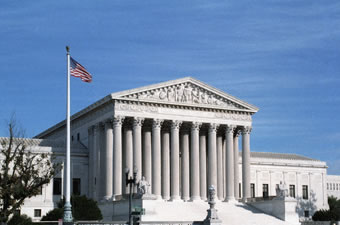 The U.S. Supreme Court just issued a momentous decision, invalidating as not “patent eligible subject matter” patent claims to own “isolated DNA” molecules that have not been modified from natural genetic sequences by removing the non-coding DNA regions. The Court’s decision also suggests that isolated natural proteins and compounds that can be used as pharmaceuticals are also patent ineligible products of nature.
As I noted in amicus briefs filed in the District Court and the Court of Appeals on behalf of the American Medical Association and other medical organizations that focus on genetics, the decision will free researchers, clinicians, and the public to perform research and diagnosis without restriction to use of Myriad’s (or other patent holders’) laboratories (including for important second opinions by independent laboratories). It will also allow competition in diagnosis, and thus avoid the monopoly prices that Myriad charges for its diagnostic services, not just for breast cancer but for all medical conditions having potential genetic links. The decision also will promote additional research and diagnosis thorough the creation of a public database of information on mutations, which currently Myriad possesses as a trade-secret, access-restricted database that it was able to create from its ability to direct all genetic testing to its own laboratories.
The decision is also significant because the Court categorically reaffirmed that products of nature are not the kind of thing that Congress intended to be subject to private ownership through patent rights, and that mere isolation from nature is not sufficient to change the nature of those products into human “inventions.” The Court, however, may not have provided a sufficiently clear line to distinguish natural products from human inventions, and I think improperly authorized as patent eligible “inventions” synthetic “cDNA” molecules that remove the non-coding DNA regions but otherwise have the same sequences as naturally occurring chromosomal DNA. As I argued in my Supreme Court brief, the proper test is one of “analogousness” to the natural products, and cDNA and its functions should readily be seen as analogous to the natural genome sequences and their coding properties on which cDNA is based. Nevertheless, the U.S. decision may have international ramifications, and will certainly affect how people view the TRIPS Agreement requirement that patents be available in all fields of “technology,” adding force to arguments that products of nature are not “inventions” within the meaning of the Agreement.
In passing, the Court clearly rejected the asserted “reliance” interests of the plaintiffs and others in investments made to seek these patents given that the Patent Office has issued patents on isolated DNA sequences for many years. As the Court stated, those concerns are for Congress, where we can now expect biotechnology and pharmaceutical and chemical patent owners to turn next, and we may (if legislation to overturn the decision is forthcoming) then confront the Constitutional issues that I raised in my Supreme Court brief.

QUT Media4th November 2025 The United Kingdom Parliament is considering a bill aimed at making smoking obsolete, which has been
Speaking at the Global Expert Network on Copyright User Rights Symposium on 16 June 2025, Professor Christophe Geiger argues for
On 25 September 2025, Professor Wend Wendland, delivered the 14th Peter Jaszi Distinguished Lecture at American University in Washington D.C..
On September 18, 2025, the Italian Senate definitively approved the country’s first comprehensive framework law on artificial intelligence (AI). The
Por Andrés Izquierdo Durante la segunda semana de agosto, fui invitado a hablar en la Feria Internacional del Libro de
By Andrés Izquierdo AI, Copyright, and the Future of Creativity: Notes from the Panama International Book FairDuring the second week