QUT Professor Endorses UK Push To Create Smokefree Generations
QUT Media4th November 2025 The United Kingdom Parliament is considering a bill aimed at making smoking obsolete, which has been

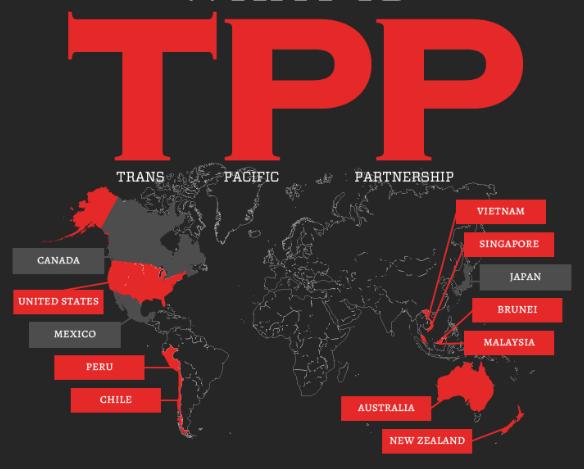
USTR has proposed giving differential treatment to some of the TPP negotiating partners. Their plan would allow countries not classified as high income by the World Bank to delay implementation of some (not all) of the proposed TRIPS-Plus provisions that would block generic medicines from entering the market. James Love and Brook Baker have both given great comments on this, suggesting improvements to the use of the World Bank classification as a method of determining which countries have different obligations.
Upon hearing about the plan to use income-based formula to apply less stringent rules to some countries, I thought of Kajal Bhardwai’s talk at the 2012 International AIDS Conference. She argued that global treatment access decisions should not be based on national economic criteria, because many low-income people live in countries that will get cut out.
One should remember that if a country has a per capita income high enough to be considered “high” (or “middle”) according to the World Bank classification, many people in that country will still be poor. This is especially the case in countries with unequal distributions of income.
The World Bank has income breakdowns by quintile for five of the 12 negotiating parties for recent years – Chile, Malaysia, Mexico, Peru and Vietnam. Below is a table with the average income for each quintile, for the most recent year when income distribution data was available. The figures for are based on GNI with Purchasing Power Parity in constant 2005 US dollars. All data is from the World Bank’s online database. (The calculations are here.)
Note that when divided into quintiles, the bottom 80% of people in Chile do not reach the World Bank’s level of high income, yet Chile is classified as a high income country. The majority of people in Mexico and Malaysia do not reach it either, yet their countries are currently close to reaching ‘high income’ status.
GNI (PPP) by income quintile (constant 2005 USD)
| Quintile | Chile (2009) | Malaysia (2009) | Mexico (2010) | Peru (2010) | Vietnam (2008) |
| Top | 37,090 |
32932.02 |
31262.35 |
20641.47 |
5476.116 |
| Fourth | 11,802 |
13851.29 |
11971.55 |
8450.483 |
2755.088 |
| Third | 7,547 |
8781.871 |
7900.04 |
5349.749 |
1994.411 |
| Second | 5,104 |
5536.675 |
5209.404 |
3273.434 |
1453.233 |
| Lowest | 2,738 |
2905.954 |
2921.77 |
1534.667 |
936.0235 |

QUT Media4th November 2025 The United Kingdom Parliament is considering a bill aimed at making smoking obsolete, which has been
Speaking at the Global Expert Network on Copyright User Rights Symposium on 16 June 2025, Professor Christophe Geiger argues for
On 25 September 2025, Professor Wend Wendland, delivered the 14th Peter Jaszi Distinguished Lecture at American University in Washington D.C..
On September 18, 2025, the Italian Senate definitively approved the country’s first comprehensive framework law on artificial intelligence (AI). The
Por Andrés Izquierdo Durante la segunda semana de agosto, fui invitado a hablar en la Feria Internacional del Libro de
By Andrés Izquierdo AI, Copyright, and the Future of Creativity: Notes from the Panama International Book FairDuring the second week