
QUT Professor Endorses UK Push To Create Smokefree Generations
QUT Media4th November 2025 The United Kingdom Parliament is considering a bill aimed at making smoking obsolete, which has been

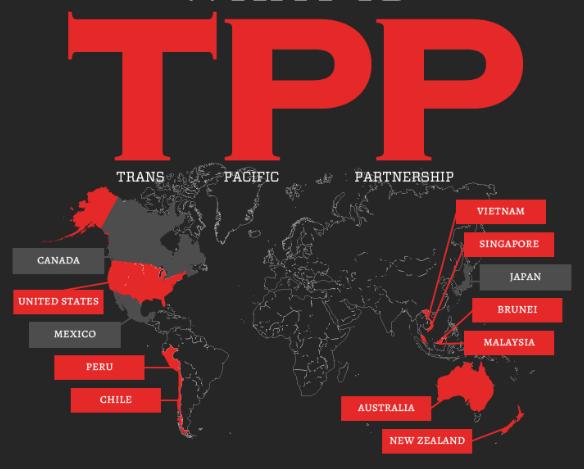
Negotiators from the 12 countries negotiating the Trans Pacific Partnership are meeting in Singapore this week. Much of the press coverage has focused on differences between the U.S. and Japan over agricultural subsidies that have been difficult to overcome. However, there have been new developments on intellectual property as it relates to access to medicines.
Negotiators had previously been discussing a differential treatment plan, under which the TPP countries still “developing” would have been exempt from certain obligations on patent and data protection. This plan is reportedly still on the table.
In order for it to work, negotiators would need to agree on a threshold under which countries would receive differential treatment. The World Bank’s “high income” designation was proposed and is still commonly cited as a threshold. Currently, the World Bank considers a country “high income” if it has a GNI per capita of $12,616 or above. Many observers pointed out that middle income countries such as Malaysia and Mexico would soon pass the threshold. (Civil Society commentary on this approach were offered by Brook Baker, James Love, and myself, among others).
Inside U.S. Trade reports that IP negotiators are also discussing a different way to provide developing countries extra flexibility, (though as of May 15, it had not been put forth in a formal proposal). The new plan would involve one set of intellectual property obligations for all TPP countries, but developing countries would be allowed a longer period of time to implement them. It is thought that this plan would grant middle income countries close to the development threshold more time to implement the obligations. According to the story the idea “is favored by brand-name drug manufacturers, who see it as setting a more predictable timetable for when stronger drug IP rules will apply than the GNI approach.” However, it leads to a new set of questions for negotiators, none of which have been settled: “which countries should be allowed a phase-in period; how long the phase-in period should be; and whether the length should be the same for all the TPP nations that are granted a phase-in period. But the biggest fight that remains is over what the single standard for pharmaceutical IP protection should actually be.”

QUT Media4th November 2025 The United Kingdom Parliament is considering a bill aimed at making smoking obsolete, which has been
Speaking at the Global Expert Network on Copyright User Rights Symposium on 16 June 2025, Professor Christophe Geiger argues for
On 25 September 2025, Professor Wend Wendland, delivered the 14th Peter Jaszi Distinguished Lecture at American University in Washington D.C..
On September 18, 2025, the Italian Senate definitively approved the country’s first comprehensive framework law on artificial intelligence (AI). The
Por Andrés Izquierdo Durante la segunda semana de agosto, fui invitado a hablar en la Feria Internacional del Libro de
By Andrés Izquierdo AI, Copyright, and the Future of Creativity: Notes from the Panama International Book FairDuring the second week