
QUT Professor Endorses UK Push To Create Smokefree Generations
QUT Media4th November 2025 The United Kingdom Parliament is considering a bill aimed at making smoking obsolete, which has been

 OTTAWA: It was being reported among various observers of NAFTA over the weekend that the talks in the IP chapter are progressing toward Copyright. The US appears poised to table the first set of its demands for that portion of the IP chapter. But it is also rumored that that the US demand may exclude the issue of copyright balance.
Civil society organizations, including internet freedom and information justice advocates from the US and Canada (Mexico was largely absent due to the earthquakes), gathered in Ottawa over the weekend to provide the public forum on NAFTA issues that the formal negotiation has yet to sponsor. The Canadian Internet Policy and Public Interest Clinic teamed with American University’s Program on Information Justice and Intellectual Property, OpenMedia, Public Citizen and the Electronic Frontier Foundation to discuss public interest concerns with the E-Commerce and copyright provisions of the potential agreement.
PIJIP presented some of its research showing that copyright balance can promote trade. For example, foreign affiliates of US technology and service firms have greater net income and total sales when they reside in countries with more open and flexible copyright user rights. For a fuller account of PIJIP’s empirical research, click here.
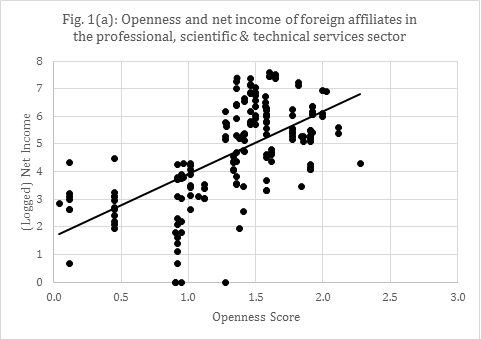
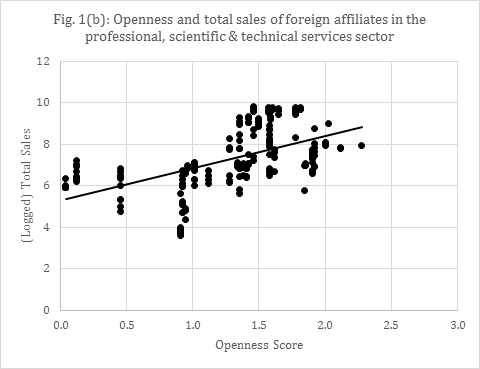

PIJIP also presented policy options for a more modern copyright balance provision. Such a provision would go beyond the TPP 18.66 requirement to “endeavor to achieve” balance, and instead contain five core provisions:
A model for meeting all these goals was presented, and is included below.
COPYRIGHT BALANCE
—————-
FOOTNOTES:
[1] Convention on the Rights of Persons with Disabilities Art 30.3 (Intellectual Property).
[2] RCEP Negotiation, Australia Proposal. See also TPP Article 18.66: Balance In Copyright And Related Rights Systems.
[3] TPP Article 18.66.
[4] See Matthew Jockers, Matthew Sag & Jason Schultz, Digital Archives: Don’t Let Copyright Block Data Mining, 490 Nature 29-30 (October 4, 2012); Matthew Sag, Copyright and Copy-Reliant Technology, 103 Northwestern University Law Review 1607–1682 (2009).
[5] EU-Mercosur FTA Negotiation, EU Proposal.
[6] US-Korea FTA Art. 18.4.
[7] Max Planck Declaration on the Three-Step Test.
[8] Marrakesh Treaty, Art. 10
[9] Max Planck Declaration on the Three-Step Test.
[10] RCEP Negotiation, Australia Proposal. See also WCT Agreed Statements, Art 10.

QUT Media4th November 2025 The United Kingdom Parliament is considering a bill aimed at making smoking obsolete, which has been
Speaking at the Global Expert Network on Copyright User Rights Symposium on 16 June 2025, Professor Christophe Geiger argues for
On 25 September 2025, Professor Wend Wendland, delivered the 14th Peter Jaszi Distinguished Lecture at American University in Washington D.C..
On September 18, 2025, the Italian Senate definitively approved the country’s first comprehensive framework law on artificial intelligence (AI). The
Por Andrés Izquierdo Durante la segunda semana de agosto, fui invitado a hablar en la Feria Internacional del Libro de
By Andrés Izquierdo AI, Copyright, and the Future of Creativity: Notes from the Panama International Book FairDuring the second week