
QUT Professor Endorses UK Push To Create Smokefree Generations
QUT Media4th November 2025 The United Kingdom Parliament is considering a bill aimed at making smoking obsolete, which has been

 Reposted from michaelgeist.ca, Link (CC-BY)
It is open access week and this year I had the honour of delivering the keynote address at a terrific open access event co-sponsored by the Ryerson University Library and Archives and the University of Toronto Libraries. My talk – which can be viewed in full here or from the embed below – starts with a review of the remarkable success of open access over the past 15 years, but quickly shifts toward the continuing connection between balanced copyright and open access.
I focus on emerging challenges for open access such as the enclosure efforts by publishers, which has led to a growing number of takedowns and the use of digital rights management to lock down publications. With the Canadian Copyright Act review slated to commence shortly, I emphasize the connection between open access, open educational resources and copyright, with some of the key issues involving term extension, notice-and-notice, statutory damages, and fair dealing.
The fair dealing discussion attracted considerable attention as it included new data that demonstrates how educational spending on copyrighted works has increased significantly since the 2012 Supreme Court of Canada decisions and copyright reforms. While critics point to the decline in Access Copyright licensing revenues, data from Canadian universities conclusively shows that this represents a shift (not a decline) in spending, with more dollars are being spent on licensing as schools invest heavily in access that can be used in the classroom and for research purposes. For example, the spending at Dalhousie University since 2012 looks like this:
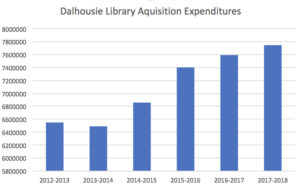
Dalhousie Library Expenditures, https://www.dal.ca/dept/financial-services/reports/budget-advisory-committee–bac–reports.html
The spending at Ryerson shows a similar trend, with major investments in site licenses and e-books. In fact, e-books was not even an expenditure category in 2012, but today outpaces print books, reflecting the greater flexibility of e-books, which can often be used for course materials:
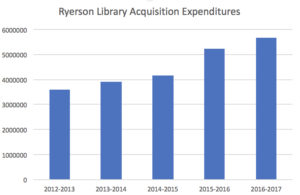
Ryerson Library Acquisitions, https://library.ryerson.ca/info/collections/budget/
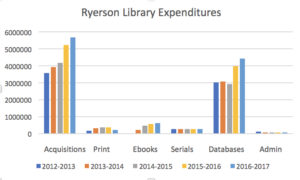
Ryerson Library Expenditures, Detailed, https://library.ryerson.ca/info/collections/budget/
The Dalhousie and Ryerson numbers are consistent with data from Statistics Canada, which surveys the Canadian Association of University Business Officers on university spending. It shows the increased spending since the fair dealing decisions and reform is national in scope.
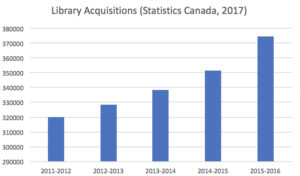
Statistics Canada Library Acquisitions, http://www23.statcan.gc.ca/imdb/p2SV.pl?Function=getSurvey&SDDS=3121
The full talk explores these issues and how those concerned with balanced copyright can become engaged at the institutional, national, and international levels.

QUT Media4th November 2025 The United Kingdom Parliament is considering a bill aimed at making smoking obsolete, which has been
Speaking at the Global Expert Network on Copyright User Rights Symposium on 16 June 2025, Professor Christophe Geiger argues for
On 25 September 2025, Professor Wend Wendland, delivered the 14th Peter Jaszi Distinguished Lecture at American University in Washington D.C..
On September 18, 2025, the Italian Senate definitively approved the country’s first comprehensive framework law on artificial intelligence (AI). The
Por Andrés Izquierdo Durante la segunda semana de agosto, fui invitado a hablar en la Feria Internacional del Libro de
By Andrés Izquierdo AI, Copyright, and the Future of Creativity: Notes from the Panama International Book FairDuring the second week