
QUT Professor Endorses UK Push To Create Smokefree Generations
QUT Media4th November 2025 The United Kingdom Parliament is considering a bill aimed at making smoking obsolete, which has been

[International Federation of Library Associations, Link (CC-BY)] Seven years ago, at the first Global Congress, the Washington Declaration was adopted: a text by civil society that underlines the importance of the public interest within intellectual property conversations. It also makes several recommendations to ensure, for instance, that exceptions and limitations to copyright are strengthened, that the public domain’s openness is valued, and that cultural creativity is supported. Now, a couple of years later, much progress had been made but there is much left to do to achieve its goals.
The Global Congress contributes to that. It is a forum for discussion on the intersection between intellectual property (copyright, patents, etc.) and the public interest. It explores how to move this topic forward by bringing together many different sectors: scholars, cultural heritage institutions, educators, human rights and public domain advocates, and many others. All understand intellectual property as a tool at the service of the public interest.
The congress kicked off with a workshop focused on advocacy at the World Intellectual Property Organisation (WIPO). At WIPO, together with efforts to push for work on exceptions and limitations to copyright for libraries, archives and museums, a group of people involved in education, including researchers at PIJIP, Education International and Communia, have drafted a Treaty on limitations and exceptions for education and research activities that is going to be presented to WIPO delegates. Participants to the workshop contributed to the draft, which is now final and open to endorsements.
The second day focused on a similar workshop, but around advocacy on copyright reforms at the national level. Participants exchanged views on common trends and possible strategies, and mapped some of the issues in an open google doc. In advocacy, some argued that while empirical evidence was needed, specific stories were the best tool to convince decisionmakers. Trade agreements were also part of the conversation, with the worry that they serve as a tool to bring bad provisions (e.g. long copyright terms such as in Mexico, where it is life of the author plus one hundred years) to other countries.
The workshops were followed by three days with very interesting sessions (and difficult choices when having to decide which to attend). Although there was a parallel track on patents with a strong focus on access to medicines, I attended many copyright and privacy-related sessions. It was a great way to find out about many initiatives and current research currently undertaken around the world in several topics that either concern or could potentially concern libraries. Here are some highlights:
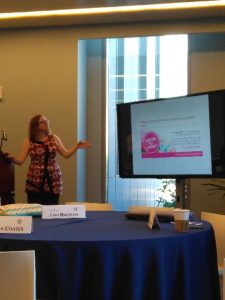
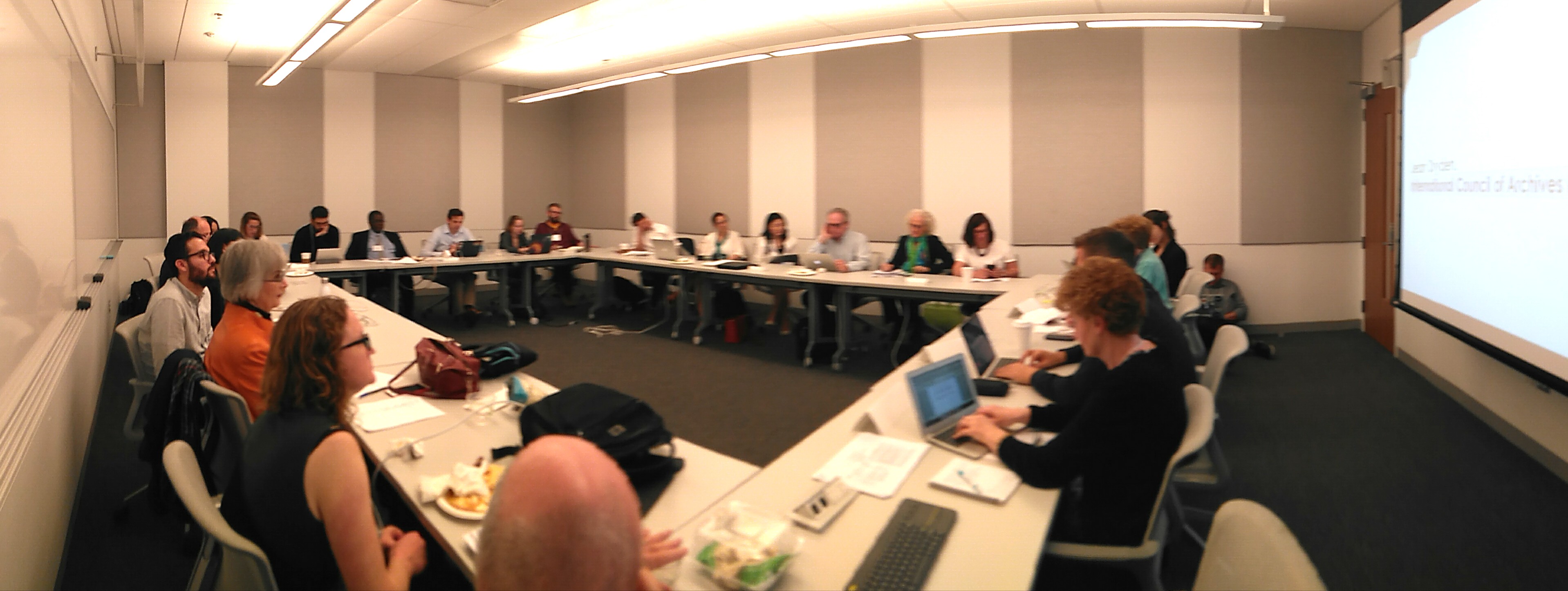
IFLA hosted a session that took participants around the world by the hands of Teresa Hackett (EIFL), Jean Dryden (ICA), Mariana Valente (InternetLab), Evelin Heidel (Creative Commons) and Paul Keller (Kennisland). Each panellist looked at current copyright reforms in their respective regions from the perspective of libraries, archives and museums, and shared trends they are observing.
Many pointed out the general preference for licensing over exceptions and limitations to access content. It is the case in Europe, for instance, with a possible exception for eLending not having made it through in the current copyright reform, which means that public lending of digital content needs to rely on licensing agreements. It is also the case in Malawi, where extended collective licensing is on the table.
In copyright reforms, libraries, archives and museums are often stuck in the middle. Content producers and tech companies have complete opposite positions, with cultural heritage institutions defending some flexibility and opening of copyright, but from a moderate perspective. While this makes our ask sound rather reasonable, challenges arise around all the attention being focused on bigger debates, leaving the cultural heritage questions for last or even for bargain.
The need for a better copyright framework, specially to ensure preservation of knowledge, has been part of the discussion lately in Brazil, following the loss of important pieces of cultural heritage due to the fire in Brazil’s National Museum in Rio de Janeiro. Advocates argued that if copyright had not been on the way, a much larger part of the collections have been preserved through digital copies. There is currently no exception in Brazilian copyright law allowing for the making of copies for the purpose of preservation.
Something that was also common across the sectors and in several regions was the lack of copyright specialist within cultural heritage institutions. Many seek external advice or resolve copyright issues the best they can with the resources they have, but more knowledge on the matter would be a significant improvement for cultural heritage institutions. A very timely IFLA Statement on Copyright Literacy also insists on the need for better copyright education and sets recommendations to library associations and governments.
In an area where there is often concern on whether enough progress is being made, spending a week with over 400 people from all over the world is a breath of fresh air. There is indeed progress, and many success stories, that show how intellectual property is closer and closer to being a tool at the service of the public interest.
More information on who participated at the Congress and the sessions that took place is available in the Congress website.

QUT Media4th November 2025 The United Kingdom Parliament is considering a bill aimed at making smoking obsolete, which has been
Speaking at the Global Expert Network on Copyright User Rights Symposium on 16 June 2025, Professor Christophe Geiger argues for
On 25 September 2025, Professor Wend Wendland, delivered the 14th Peter Jaszi Distinguished Lecture at American University in Washington D.C..
On September 18, 2025, the Italian Senate definitively approved the country’s first comprehensive framework law on artificial intelligence (AI). The
Por Andrés Izquierdo Durante la segunda semana de agosto, fui invitado a hablar en la Feria Internacional del Libro de
By Andrés Izquierdo AI, Copyright, and the Future of Creativity: Notes from the Panama International Book FairDuring the second week