
QUT Professor Endorses UK Push To Create Smokefree Generations
QUT Media4th November 2025 The United Kingdom Parliament is considering a bill aimed at making smoking obsolete, which has been

Julia Reda, MEP, Link
In the evening of February 13, negotiators from the European Parliament and the Council concluded the trilogue negotiations with a final text for the new EU Copyright Directive.
For two years we’ve debated different drafts and versions of the controversial Articles 11 and 13. Now, there is no more ambiguity: This law will fundamentally change the internet as we know it – if it is adopted in the upcoming final vote. But we can still prevent that!
Read on for details about the text, how we got here and what to do now:
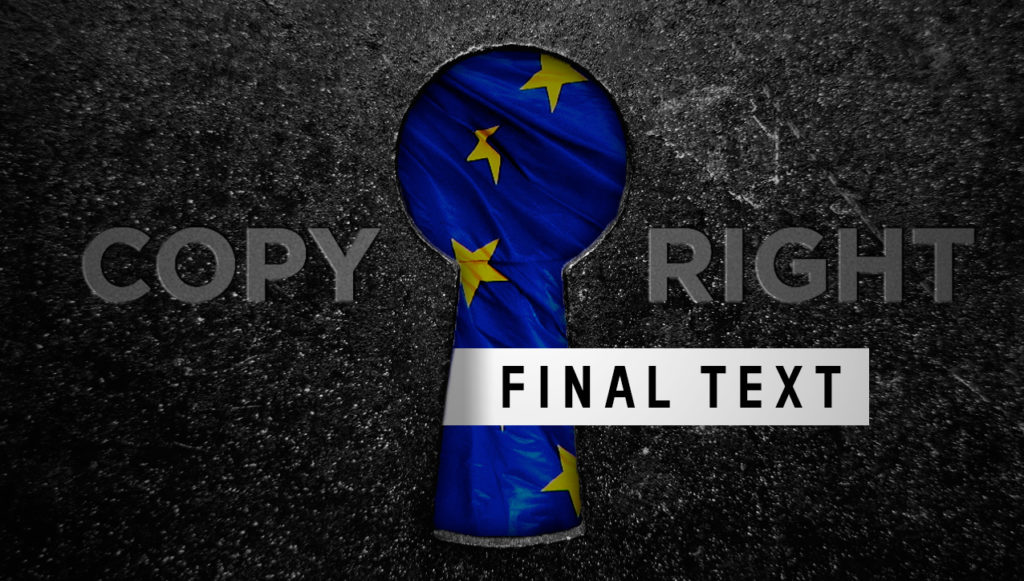
Please click the links to take a look at the final wording of Article 11 and Article 13. Here’s my summary:
Parliament negotiator Axel Voss accepted the deal between France and Germany I laid out in a recent blog post:

The final version of this extra copyright for news sites closely resembles the version that already failed in Germany – only this time not limited to search engines and news aggregators, meaning it will do damage to a lot more websites.
The project to allow Europeans to conduct Text and Data Mining, crucial for modern research and the development of artificial intelligence, has been obstructed with too many caveats and requirements. Rightholders can opt out of having their works datamined by anyone except research organisations.
Authors’ rights: The Parliament’s proposal that authors should have a right to proportionate remuneration has been severely watered down: Total buy-out contracts will continue to be the norm.
Minor improvements for access to cultural heritage: Libraries will be able to publish out-of-commerce works online and museums will no longer be able to claim copyright on photographs of centuries-old paintings.
* * *
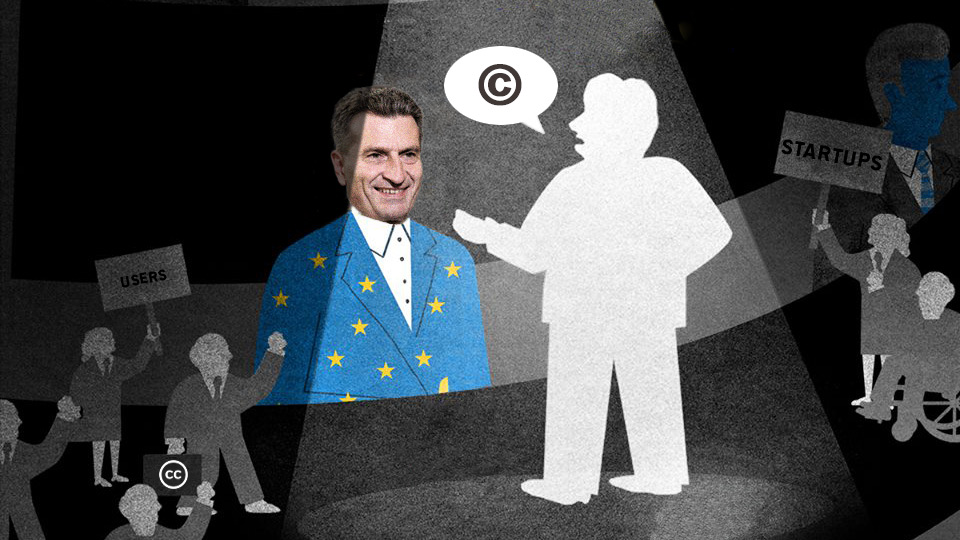
The history of this law is a shameful one. From the very beginning, the purpose of Articles 11 and 13 was never to solve clearly-defined issues in copyright law with well-assessed measures, but to serve powerful special interests, with hardly any concern for the collateral damage caused.
In the relentless pursuit of this goal, concerns by independent academics, fundamental rights defenders, independent publishers, startups and many others were ignored. At times, confusion was spread about crystal-clear contrary evidence. Parliament negotiator Axel Voss defamed the unprecedented protest of millions of internet users as “built on lies”.
In his conservative EPP group, the driving force behind this law, dissenters were marginalised. The work of their initially-appointed representative was thrown out after the conclusions she reached were too sensible. Mr Voss then voted so blindly in favour of any and all restrictive measures that he was caught by surprise by some of the nonsense he had gotten approved. His party, the German CDU/CSU, nonchalantly violated the coalition agreement they had signed (which rejected upload filters), paying no mind to their own minister for digital issues.
It took efforts equally herculean and sisyphean across party lines to prevent the text from turning out even worse than it now is.
In the end, a closed-door horse trade between France and Germany was enough to outweigh the objections… so far.
What’s important to note, though: It’s not “the EU” in general that is to blame – but those who put special interests above fundamental rights who currently hold considerable power. You can change that at the polls! The anti-EU far right is trying to seize this opportunity to promote their narrow-minded nationalist agenda – when in fact without the persistent support of the far-right ENF Group (dominated by the Rassemblement/Front National) the law could have been stopped in the crucial Legal Affairs Committee and in general would not be as extreme as it is today.
* * *
Our best chance to stop the EU copyright law: The upcoming Parliament vote.
Tweet this!
The Parliament and Council negotiators who agreed on the final text now return to their institutions seeking approval of the result. If it passes both votes unchanged, it becomes EU law, which member states are forced to implement into national law.
In both bodies, there is resistance.
The Parliament’s process starts with the approval by the Legal Affairs Committee – which is likely to be given on Monday, February 18.
Next, at a date to be announced, the EU member state governments will vote in the Council. The law can be stopped here either by 13 member state governments or by any number of governments who together represent 35% of the EU population (calculator). Last time, 8 countries representing 27% of the population were opposed. Either a large country like Germany or several small ones would need to change their minds: This is the less likely way to stop it.
Our best bet: The final vote in the plenary of the European Parliament, when all 751 MEPs, directly elected to represent the people, have a vote. This will take place either between March 25 and 28, on April 4 or between April 15 and 18. We’ve already demonstrated last July that a majority against a bad copyright proposal is achievable.
The plenary can vote to kill the bill – or to make changes, like removing Articles 11 and 13. In the latter case, it’s up to the Council to decide whether to accept these changes (the Directive then becomes law without these articles) or to shelve the project until after the EU elections in May, which will reshuffle all the cards.
The final Parliament vote will happen mere weeks before the EU elections. Most MEPs – and certainly all parties – are going to be seeking reelection. Articles 11 and 13 will be defeated if enough voters make these issues relevant to the campaigns. (Here’s how to vote in the EU elections – change the language to one of your country’s official ones for specific information)
It is up to you to make clear to your representatives: Their vote on whether to break the internet with Articles 11 and 13 will make or break your vote in the EU elections. Be insistent – but please always stay polite.
Together, we can still stop this law.

QUT Media4th November 2025 The United Kingdom Parliament is considering a bill aimed at making smoking obsolete, which has been
Speaking at the Global Expert Network on Copyright User Rights Symposium on 16 June 2025, Professor Christophe Geiger argues for
On 25 September 2025, Professor Wend Wendland, delivered the 14th Peter Jaszi Distinguished Lecture at American University in Washington D.C..
On September 18, 2025, the Italian Senate definitively approved the country’s first comprehensive framework law on artificial intelligence (AI). The
Por Andrés Izquierdo Durante la segunda semana de agosto, fui invitado a hablar en la Feria Internacional del Libro de
By Andrés Izquierdo AI, Copyright, and the Future of Creativity: Notes from the Panama International Book FairDuring the second week