Category Multilateral Fora

New Partnerships – A Right to Research in Africa

[Teresa Hackett] A major conference co-organized by EIFL, with national and international partners, took place in South Africa on 23-27 January 2023. ‘A Right to Research in Africa? A Week of Debates on Copyright and Access to Knowledge’ was attended by over 280 legal academics, researchers, librarians, policy-makers and Geneva-based diplomats from over a dozen countries in Africa and beyond. It was the first time these diverse groups, connected by a common interest in copyright, came together to hear and to learn from each other about the copyright framework needed to support modern research.

STEPS FORWARD FOR COPYRIGHT EXCEPTIONS AND LIMITATIONS FOR EDUCATION AND RESEARCH AT THE WIPO SCCR 43 AGENDA

[Deborah De Angelis] From March 13th to 17th, 2023, the 43rd meeting of the WIPO SCCR was held in Geneva, where significant advancements have been achieved by the Committee with the adoption of a work program on exceptions and limitations based on the Proposal by the African Group for a Draft Work Program on Exceptions and Limitations (SCCR/43/8). The program is supported by the Access to Knowledge Coalition (A2K), to which Communia Association and Creative Commons Italy Chapter are members together with numerous other associations representing educators, researchers, students, libraries, archives, museums, other knowledge users and creative communities in the world.

A Great Week at WIPO

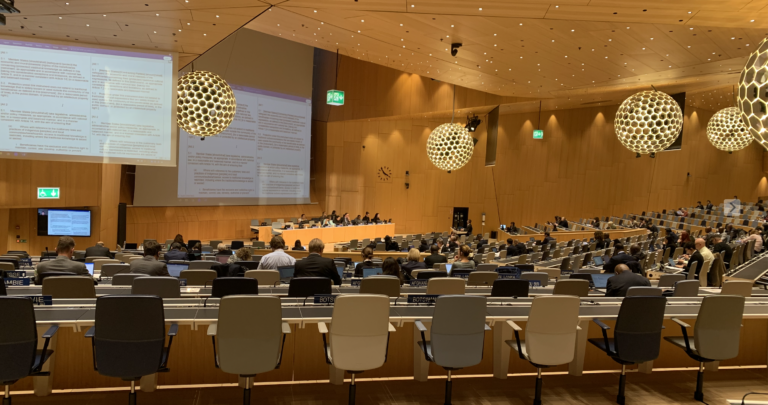
[Teresa Hackett] The 43rd session of WIPO's Standing Committee on Copyright and Related Rights (SCCR), that sets international copyright law and policy, took place in Geneva from 13 - 17 March 2023. More than 35 civil society advocates from five continents (Asia, Africa, Europe, North and South America), members of the recently formed coalition on Access to Knowledge (A2K), participated in the meeting. The results were positive. I was there throughout the week representing EIFL with Dick Kawooya, University of South Carolina, USA, and expert advisor Professor Anthony Kakooza, Makerere University, Uganda. Here are the highlights.

Highlights from WIPO’s 43rd Meeting of the Standing Committee on Copyright and Related Rights

[Sean Flynn] The 43rd Meeting of the WIPO Standing Committee on Copyright and Related Rights made substantial progress on issues of concern to a newly formed Access to Knowledge Coalition https://www.a2k-coalition.org/ These include the adoption of a work programme on limitations and exceptions, progress on the limitations and exceptions provision in the draft broadcast treaty, and the reviving of a second meeting of the SCCR. These advances were promoted in part by changes in representation from Brazil, Chile, Colombia and Argentina and the continuing expertise and leadership within the African Group. 

Trade Associations Write USPTO in Opposition to WIPO Broadcast Treaty

Six trade associations have written Mary Critharis, Director of the USPTO's Office of Policy and International Affairs, urging the U.S. delegation to the World Intellectual Property Organization (WIPO) to oppose the Broadcast Treaty. The treaty is under debate this week at WIPO's Standing Committee on Copyright and Related Rights. The letter explains that "a rights-based broadcasting treaty is unnecessary and counterproductive" and that signal theft can be combatted through "a treaty narrowly focused on signal theft, consistent with the approach taken in the United States."

Public Interest Analysis of the WIPO SCCR 43 Agenda

[Sean Flynn] I submit the following comments on limitations and exceptions issues in agenda items for the 43rd Meeting of the World Intellectual Property Organization Standing Committee on Copyright and Related Rights... The current draft of the Broadcast Treaty continues to raise important public interest concerns. Although the mandate of the Committee is to work on a “signal based” approach, the treaty continues to use a rights-based structure and language modeled on the Rome Convention rather than the more appropriate Brussels Convention. The use of a rights-based model causes particular problems of layering rights on top of each other because broadcast signals normally carry copyrighted content. Although there is now on opt-out in Article 10 - permitting alternative effective regulatory means - the dominance of the rights based perspective in the drafting will encourage adoption of its model.

Report of SCCR/42 on Limitations and Exceptions and the African Group Work Plan Proposal

[Andrés Izquierdo] The last WIPO-SCCR/42 discussions focused on the African Group Work Plan proposal, the revised draft broadcasting treaty, and limitations and exceptions (L&Es) in favor of libraries, archives, museums, educational institutions, research institutions, and people with disabilities. The primary SCCR outcomes on L&Es enclosed approval of two points of the African Group Work Plan proposal, including future presentations on cross-border copyright issues linked to online education and research practices, and developing toolkits supporting education, research, and preservation of cultural heritage.

Limitations and Exceptions in Second Revised Draft Text of the Broadcast Treaty

The 43rd meeting of the World Intellectual Property Organization Standing Committee on Copyright and Related Rights will consider a Second Revised Draft Text for the WIPO Broadcasting Organizations Treaty (“Second Revised Draft”). A question that is likely to be posed is whether the text contains sufficient consensus to move toward a diplomatic conference. Considerable questions have been raised about the need for and scope of rights in an anti-piracy treaty that would ultimately cover content of signals that are already protected by other copyright and related rights treaties, for example by KEI and Professor Bern Hugenholtz. This note focuses on the limitations and exceptions provisions of the Second Revised Draft. For comments embedded in a redlined version of the Draft showing changes from the version presented in SCCR 42, see PIJIP’s redlined version of the Second Revised Draft.

Zero Draft and Small Working Groups: Is This the Way Forward for the WIPO IGC?

[Andrés Izquierdo] The last WIPO-IGC discussions focused on the beneficiaries and the role of nation-states and other entities regarding TK/TCEs. The main results included broadening the definition of beneficiaries, including a proposed Chair’s TK/TCE text to advance progress on the negotiations – the Zero Draft, and the newly created small contact groups. The Session also included additional facilitators’ text proposals, and an ad hoc expert group report.

WHO Proposed Instrument on Pandemics: the Conceptual Zero Draft Needs Substantial Improvement to Address Global Public Health Needs

[South Centre] We welcome the discussions in the WHO on a new instrument on pandemic prevention, preparedness, response and recovery. While we appreciate the preparation and sharing with WHO members of the Conceptual Zero Draft (hereinafter ‘the Draft’), we note that more work is needed to address the insufficiency of the tools at the disposal of the WHO that became evident with the COVID-19 pandemic.