Category IP & Research

Sustainable Innovation: Intellectual Property, Technology Transfer, and Global Public Goods

QUT News, 22 February 2024 22nd February 2024 The role of intellectual property rights in technology transfer to developing countries and least developed countries to achieve the UN Sustainable Development Goals (SDGs) is a major theme of a new international…

Meeting with WIPO Director General Daren Tang, Spotlights NGOs’ Crucial Role in Intellectual Property Landscape

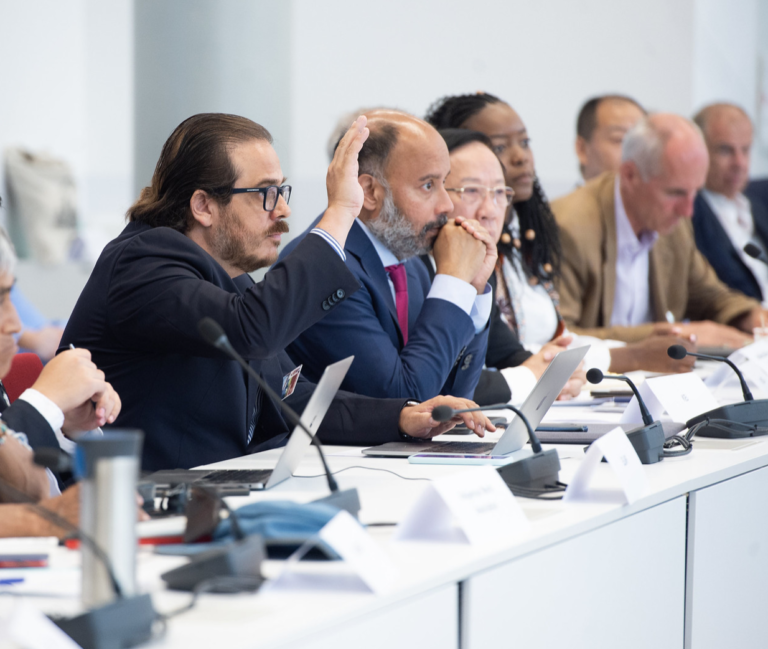
[Andrés Izquierdo] On behalf of WCL PIJIP and the Global Network on Copyright User Rights, Andrés Izquierdo attended a meeting organized by Daren Tang, Director General of the World Intellectual Property Organization – WIPO. The meeting had the participation of more than 40 accredited NGOs and industry stakeholder groups. This meeting served to highlight the pivotal role played by NGOs in the Organization’s work. To the meeting also attended KEI, IFLA, and Innovarte.

South Africa’s Copyright Amendment Bill: Making Progress at the Provinces

[Sanya Samtani] Last week, in the latest instalment of South Africa’s copyright reform saga, the Select Committee on Trade and Industry, Economic Development, Small Business, Tourism, Employment and Labour at the National Council of Provinces (one of the houses of Parliament in South Africa), held a clause-by-clause vote on proposed amendments to the Copyright Amendment Bill [B13D-2017] (CAB) and Performers Protection Amendment Bill [B24-2016]. I summarise some of the salient outcomes of this vote below with regard to the CAB.

Finally, Something to Look Forward to at WIPO

[Teresa Nobre] As the summer approaches, we are taking stock of the latest developments in copyright policy debates. The scene-stealer “Generative AI” is prompting a copyright comeback in the EU bubble, forcing everyone to take a position (including us). Yet the conversations that deserve the attention of copyright experts in the months to come are not limited to ChatGPT and its peers, or even to Brussels for that matter. Just when our hopes were fading, international copyright policy-making is back in action in Geneva, and the next chapter of the discussions looks promising!

The First WIPO Project on Text and Data Mining

[Andrés Izquierdo] On April 28th, 2023, the World Intellectual Property Organization's Committee on Development and Intellectual Property (CDIP) approved a pilot project on Text and Data Mining (TDM) to support research and innovation in universities and other research-oriented institutions in Africa. PIJIP has been participating as an observer on this Committee since 2022... The pilot project will begin by mapping the current treaty implementation, legal framework, and licensing schemes, as well as existing materials such as studies and toolkits in the region, to assess the use of TDM in research, particularly by universities and research-oriented institutions. In the second step, the project will collaborate with three pilot universities in Africa, along with input from other regional stakeholders, to develop case studies on the application of TDM in research, using the information and experiences gathered during the mapping process.


PIJIP’s Right to Research Project on World IP Day

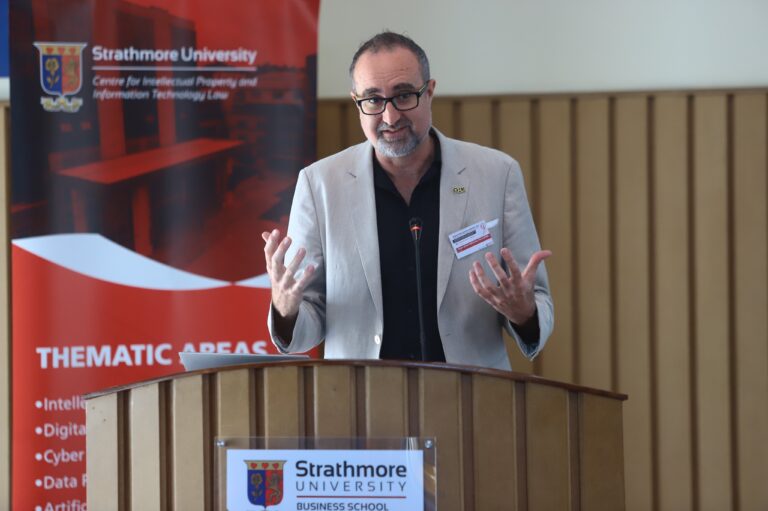
[Sean Flynn] Today, on WIPO’s World IP Day, the Right to Research project is participating in two launches of products on text and data mining in Africa. Andres Izquierdo is at the WIPO Committee on Development and Intellectual Property supporting the African Group and their proposal of a pilot project on copyright and text and data mining for research institutions... I am at Strathmore University in Nairobi for a launch of the Centre for Intellectual Property and Information Technology Law’s report on Right to Research and Copyright Law in Kenya

Research as a Human Right: Right to Research in International Copyright

[Cybel Ekpa] In PIJIP’s Right to Research video series, Professor Desmond Oriakhogba discussed the importance of the right to research in empowering citizens to participate in economic development, democratic processes, and personal problem-solving. While most ongoing research in Africa takes shape informally, there is a major challenge of access to information, which is a crucial ingredient for effective research. The problem is caused by copyright regimes in Africa, which are formulated in such a way as to limit access to information.

Highlights from WIPO’s 43rd Meeting of the Standing Committee on Copyright and Related Rights

[Sean Flynn] The 43rd Meeting of the WIPO Standing Committee on Copyright and Related Rights made substantial progress on issues of concern to a newly formed Access to Knowledge Coalition https://www.a2k-coalition.org/ These include the adoption of a work programme on limitations and exceptions, progress on the limitations and exceptions provision in the draft broadcast treaty, and the reviving of a second meeting of the SCCR. These advances were promoted in part by changes in representation from Brazil, Chile, Colombia and Argentina and the continuing expertise and leadership within the African Group. 

Developmental and Cross Border Uses of Copyright Limitations and Exceptions

[Sean Flynn] Where allowed by copyright law, digital uses for education, research and cultural heritage are contributing to social and economic development. This document describes some recent developmental uses of copyright limitations and exceptions that are relevant to the issues being discussed at the 43rd meeting of the WIPO Standing Committee on Copyright and Related Rights. The examples were collected by members of the Access to Knowledge Coalition.

Public Interest Analysis of the WIPO SCCR 43 Agenda

[Sean Flynn] I submit the following comments on limitations and exceptions issues in agenda items for the 43rd Meeting of the World Intellectual Property Organization Standing Committee on Copyright and Related Rights... The current draft of the Broadcast Treaty continues to raise important public interest concerns. Although the mandate of the Committee is to work on a “signal based” approach, the treaty continues to use a rights-based structure and language modeled on the Rome Convention rather than the more appropriate Brussels Convention. The use of a rights-based model causes particular problems of layering rights on top of each other because broadcast signals normally carry copyrighted content. Although there is now on opt-out in Article 10 - permitting alternative effective regulatory means - the dominance of the rights based perspective in the drafting will encourage adoption of its model.

Nobody Puts Research In a Cage: Researchers’ Perspectives on Working With Copyright

[Teresa Nobre, Maria Drabczyk, Eric Luth, Deborah De Angelis, and Maja Bogataj] Introduction: Access to Knowledge is key to the fundamental Right to Research. Resources used in the context of scientific research are often protected by copyright and related rights, and right holders can prohibit their use for research purposes. Researchers rely on copyright exceptions and limitations to access, use and reuse protected data sources in scientific projects. A fair and modern copyright framework is therefore essential to create an enabling environment for scientific research.

Right to Research and Copyright Law in Kenya: Text and Data Mining

[Chebet Koros, Joshua Kitili, Cynthia Nzuki and Natasha Karanja] ...The Strathmore University Centre for Intellectual Property and Information Technology Law carried out a study to determine the relationship between Kenya’s technology and copyright legal framework that affect the use of TDM research. It had four specific targets: to determine if Kenya’s technology policy promotes technology, learning, and research; to understand the prospects and plans for enabling a legal environment for research and development of technology; to assess the role of copyright law in enabling TDM research, and finally to provide recommendations for national, regional, and international copyright policies that enable TDM research. This policy brief is a summary of that study with specific policy recommendations resulting from the study.