
Category Limitations and Exceptions

New Partnerships – A Right to Research in Africa

[Teresa Hackett] A major conference co-organized by EIFL, with national and international partners, took place in South Africa on 23-27 January 2023. ‘A Right to Research in Africa? A Week of Debates on Copyright and Access to Knowledge’ was attended by over 280 legal academics, researchers, librarians, policy-makers and Geneva-based diplomats from over a dozen countries in Africa and beyond. It was the first time these diverse groups, connected by a common interest in copyright, came together to hear and to learn from each other about the copyright framework needed to support modern research.
PIJIP’s Right to Research Project on World IP Day

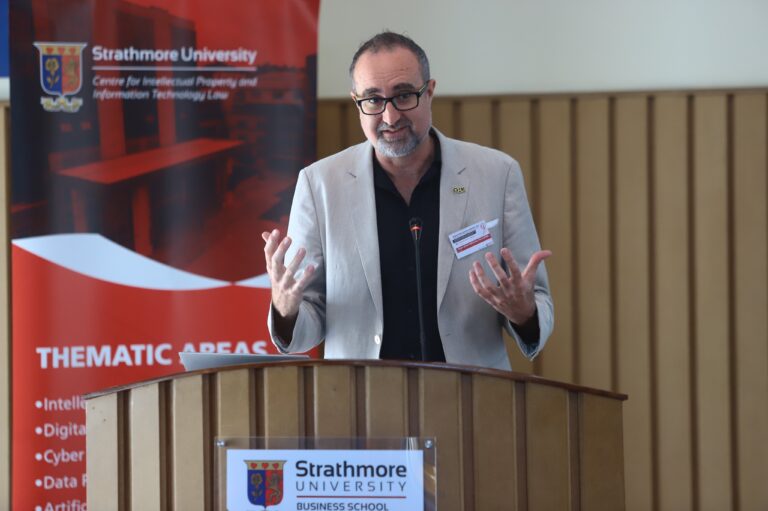
[Sean Flynn] Today, on WIPO’s World IP Day, the Right to Research project is participating in two launches of products on text and data mining in Africa. Andres Izquierdo is at the WIPO Committee on Development and Intellectual Property supporting the African Group and their proposal of a pilot project on copyright and text and data mining for research institutions... I am at Strathmore University in Nairobi for a launch of the Centre for Intellectual Property and Information Technology Law’s report on Right to Research and Copyright Law in Kenya

STEPS FORWARD FOR COPYRIGHT EXCEPTIONS AND LIMITATIONS FOR EDUCATION AND RESEARCH AT THE WIPO SCCR 43 AGENDA

[Deborah De Angelis] From March 13th to 17th, 2023, the 43rd meeting of the WIPO SCCR was held in Geneva, where significant advancements have been achieved by the Committee with the adoption of a work program on exceptions and limitations based on the Proposal by the African Group for a Draft Work Program on Exceptions and Limitations (SCCR/43/8). The program is supported by the Access to Knowledge Coalition (A2K), to which Communia Association and Creative Commons Italy Chapter are members together with numerous other associations representing educators, researchers, students, libraries, archives, museums, other knowledge users and creative communities in the world.

A Great Week at WIPO

[Teresa Hackett] The 43rd session of WIPO's Standing Committee on Copyright and Related Rights (SCCR), that sets international copyright law and policy, took place in Geneva from 13 - 17 March 2023. More than 35 civil society advocates from five continents (Asia, Africa, Europe, North and South America), members of the recently formed coalition on Access to Knowledge (A2K), participated in the meeting. The results were positive. I was there throughout the week representing EIFL with Dick Kawooya, University of South Carolina, USA, and expert advisor Professor Anthony Kakooza, Makerere University, Uganda. Here are the highlights.

Nigeria’s New Copyright Act 2022: How Libraries Can Benefit 

[Desmond Oriakhogba] In October 2021, I wrote about the Nigerian copyright law reform process... The reform process is now complete with the recent assent to the Bill, as the Copyright Act 2022, by the Nigerian President. The Act introduces a new vista in Nigerian copyright law as it repeals the Copyright Act 2004. How can libraries in Nigeria benefit from the Copyright Act 2022?

The Fair Use/Fair Dealing Handbook

[Jonathan Band and Jonathan Gerafi] More than 40 countries with over one-third of the world’s population have fair use or fair dealing provisions in their copyright laws. These countries are in all regions of the world and at all levels of development. The broad diffusion of fair use and fair dealing indicates that there is no basis for preventing the more widespread adoption of these doctrines, with the benefits their flexibility brings to authors, publishers, consumers, technology companies, libraries, museums, educational institutions, and governments.

Right to Research: Understanding Copyright and Access to Scientific Works: Insights from Professor Sara Bannerman

Professor Sara Bannerman shared insights on the historical context of copyright and the need to consider research as a human right during our Right to Research event series last semester. As an expert in copyright history, Bannerman stressed the importance of knowing about the past to understand the present and future of copyright and intellectual property.  

New Nigerian Copyright Act Creates Open Fair Dealing Exception

[Jonathan Band] Nigerian President Muhammadu Buhari has assented to a new copyright act that updates the country’s exceptions and limitations for the digital environment. Most significantly, the act replaces a closed fair dealing provision based on the English copyright law with an open provision modeled on the U.S. Copyright Act’s fair use right. The adoption of an open fair dealing provision by Africa’s largest producer of copyrighted material should put to rest arguments elsewhere on the continent that open exceptions are inimical to copyright industries.

Highlights from WIPO’s 43rd Meeting of the Standing Committee on Copyright and Related Rights

[Sean Flynn] The 43rd Meeting of the WIPO Standing Committee on Copyright and Related Rights made substantial progress on issues of concern to a newly formed Access to Knowledge Coalition https://www.a2k-coalition.org/ These include the adoption of a work programme on limitations and exceptions, progress on the limitations and exceptions provision in the draft broadcast treaty, and the reviving of a second meeting of the SCCR. These advances were promoted in part by changes in representation from Brazil, Chile, Colombia and Argentina and the continuing expertise and leadership within the African Group. 

Developmental and Cross Border Uses of Copyright Limitations and Exceptions

[Sean Flynn] Where allowed by copyright law, digital uses for education, research and cultural heritage are contributing to social and economic development. This document describes some recent developmental uses of copyright limitations and exceptions that are relevant to the issues being discussed at the 43rd meeting of the WIPO Standing Committee on Copyright and Related Rights. The examples were collected by members of the Access to Knowledge Coalition.

Public Interest Analysis of the WIPO SCCR 43 Agenda

[Sean Flynn] I submit the following comments on limitations and exceptions issues in agenda items for the 43rd Meeting of the World Intellectual Property Organization Standing Committee on Copyright and Related Rights... The current draft of the Broadcast Treaty continues to raise important public interest concerns. Although the mandate of the Committee is to work on a “signal based” approach, the treaty continues to use a rights-based structure and language modeled on the Rome Convention rather than the more appropriate Brussels Convention. The use of a rights-based model causes particular problems of layering rights on top of each other because broadcast signals normally carry copyrighted content. Although there is now on opt-out in Article 10 - permitting alternative effective regulatory means - the dominance of the rights based perspective in the drafting will encourage adoption of its model.