
Category Limitations and Exceptions

Report of SCCR/42 on Limitations and Exceptions and the African Group Work Plan Proposal
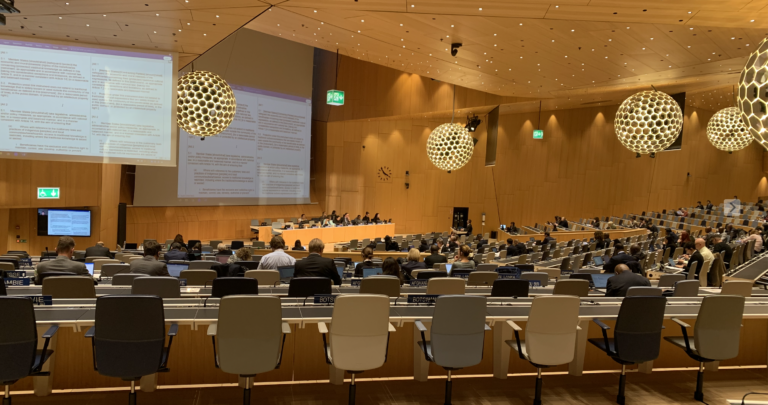
[Andrés Izquierdo] The last WIPO-SCCR/42 discussions focused on the African Group Work Plan proposal, the revised draft broadcasting treaty, and limitations and exceptions (L&Es) in favor of libraries, archives, museums, educational institutions, research institutions, and people with disabilities. The primary SCCR outcomes on L&Es enclosed approval of two points of the African Group Work Plan proposal, including future presentations on cross-border copyright issues linked to online education and research practices, and developing toolkits supporting education, research, and preservation of cultural heritage.
Limitations and Exceptions in Second Revised Draft Text of the Broadcast Treaty

The 43rd meeting of the World Intellectual Property Organization Standing Committee on Copyright and Related Rights will consider a Second Revised Draft Text for the WIPO Broadcasting Organizations Treaty (“Second Revised Draft”). A question that is likely to be posed is whether the text contains sufficient consensus to move toward a diplomatic conference. Considerable questions have been raised about the need for and scope of rights in an anti-piracy treaty that would ultimately cover content of signals that are already protected by other copyright and related rights treaties, for example by KEI and Professor Bern Hugenholtz. This note focuses on the limitations and exceptions provisions of the Second Revised Draft. For comments embedded in a redlined version of the Draft showing changes from the version presented in SCCR 42, see PIJIP’s redlined version of the Second Revised Draft.

South Centre Supports Debates on Developments in Copyright Law and Access to Knowledge in Africa

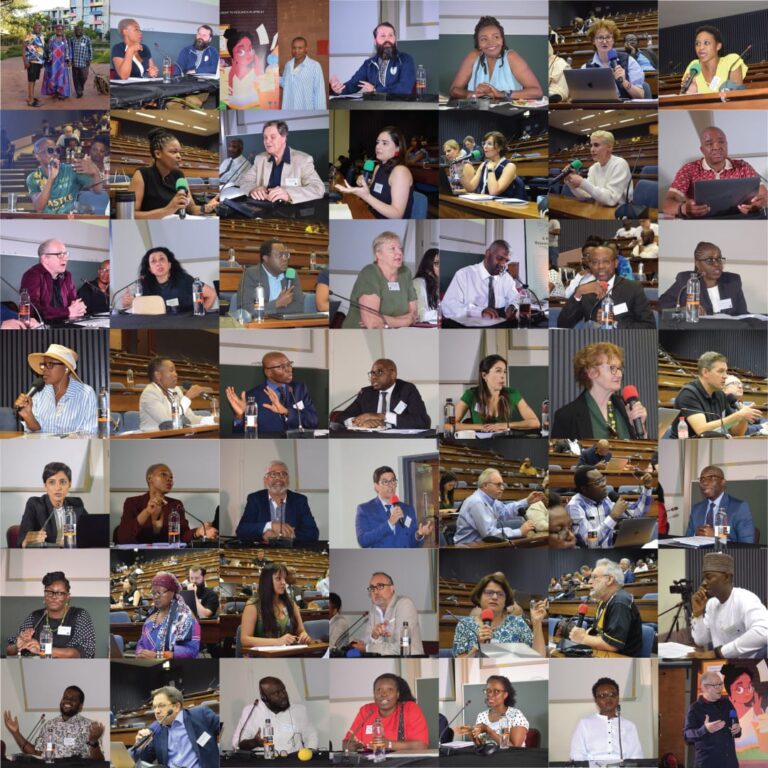
[Vitor Ido] A conference “A Right to Research in Africa? A Week of Debates on Copyright and Access to Knowledge” took place on 23-27 January 2023 at the University of Pretoria and the University of Cape Town, South Africa. The gathering of scholars, artists, librarians, researchers and government officials had the objective to discuss the evolution of copyright law and the role of limitations and exceptions (L&Es) to advance research in Africa. The week of debates was co-organized by the South Centre, ReCreate South Africa, Program on Information Justice and Intellectual Property (PIJIP) – American University Washington College of Law, Electronic Information for Libraries (EIFL), the University of Pretoria – Future Africa, the University of Cape Town – IP Unit, the Centre for Intellectual Property and Information Technology Law (CIPIT) – Strathmore University, Wikimedia Foundation and Masakhane.

Canadian Copyright, Fair Dealing and Education, Part One – Setting the Record Straight

[Michael Geist] Canadian copyright lobby groups have relentlessly lobbied the government to overturn decades of Supreme Court of Canada jurisprudence, seeking unprecedented restrictions on fair dealing that include eliminating it for educational institutions if a licence is available. In doing so, they have relied on a steady diet of misleading claims about the state of the law, the licensing practices of Canadian educational institutions, the importance (or lack thereof) of copying of materials in course packs, and the effects of fair dealing. This week is Fair Dealing Week, which provides an opportunity to set the record straight on Canadian copyright and education, backed by actual data on what takes place on university campuses across the country.

A Right to Research in Africa

[Sean Flynn] The Right to Research in International Copyright Project hosted a week of conferences in South Africa, January 23-27, 2023. The week of public and private meetings in Pretoria and Cape Town featured discussions of how African researchers are using modern digital technologies to address a range of pressing research questions that require use of research exceptions in copyright law. Academics, practicing lawyers and government officials from several African countries provided the legal and policy context for the researchers’ work, illuminating both the flexibility in many African laws that permit research uses, as well as  where changes in domestic and international law could serve the public interest. 

TDM and Brazilian Copyright: Recent Developments

[Allan Rocha de Souza and Luca Schirru] Statutory limitations and exceptions (L&E) for copyright in Brazil are notoriously precarious. However, under the Constitutional framework, the courts have come to regard their interpretation as extensive and not limited to the situations set forth in the copyright law. As it stands now, they must be considered as a flexible set... Despite the flexible character of L&Es in Brazil, none of them directly addresses uses for the purpose of research or text and data mining (TDM). Nonetheless, policy discussions (both within the legislature and the executive) have started to address the issue, particularly in relation to innovation and the training of Artificial Intelligence (AI) systems.

SIGN THE COPYRIGHT BILL, EIFL URGES NIGERIAN PRESIDENT

[Electronic Information for Libraries] EIFL has written to the President of Nigeria, His Excellency Muhammadu Buhari, requesting that he sign the Copyright Bill 2022 (SBs. 688 & 769) into law at the earliest opportunity. The Bill, which was passed by the National Assembly on 22 July 2022, overhauls and modernizes Nigeria’s copyright system. It supports the use of works in the digital environment to help foster a creative, technology-friendly ecosystem, and introduces new exceptions for libraries, education and people with disabilities.

Examples of Text and Data Mining Research Using Copyrighted Materials

[Sean Flynn and Lokesh Vyas] Last week, Science Magazine published a joint academic opinion by leading copyright scholars from around the world calling for copyright reform to enable text and data mining (TDM) research. The opinion calls for all countries to evaluate their laws, and for international institutions to guide them, so that text and data mining research can take place everywhere, including through cross-border collaborations between researchers in different countries. In this article, we survey some of the kinds of important TDM projects that need copyright permission to be enabled everywhere. 

The Role of Copyright Law in Text and Data Mining Research

Natasha Karanja & Chebet Koros] When evaluating the copyright ecosystem within the African continent, a perceived imbalance is identified, where researchers face barriers in accessing materials protected by copyright.1 It has been claimed that African copyright regimes do not accommodate public interests because they do not support the research of various stakeholders, specifically within the new era of Artificial Intelligence research. For this reason, and according to one African scholar, African copyright regimes are considered “not fit for purpose”.2 The majority of the African copyright laws provide for a closed list of copyright exceptions, with none applying specifically to Text and Data Mining research.3 This article will define what Text and Data Mining (TDM) research is, its benefits, and outline the role of copyright in TDM research within the Kenyan context vis a vis other countries’ perspectives.

The Copyright Experience of the University of the South Pacific: a Union Perspective

[Elizabeth Reade Fong] Legislation is meant not only to protect but to bring equity. And copyright legislation is not meant to be any different. However, the reality on the ground in a developing country like Fiji has only reinforced the inequity of access to and, more importantly, the use of information for learning and teaching and research for libraries and educational institutions. The pandemic exacerbated the situation!

Reading Sec. 52(1)(za) of the Copyright Act 1957

[Arul George Scaria] Abstract: Sec. 52(1)(za) of the Copyright Act 1957 is an important exception provision under the Indian copyright law. It exempts from copyright infringement liability public performance and communication to the public of certain types of copyrighted works in the course of bonafide religious ceremonies and official ceremonies... Recently, a copyright infringement case was initiated before the Delhi High Court by Phonographic Performance Limited (PPL), which issues licenses for public performance of sound recordings assigned to it by copyright holders, against Lookpart Exhibitions and Events Private Limited (Lookpart), which provides event management services for different social events including weddings.

Creative Action under Two Copyright Regimes: Filmmaking and Visual Arts in Australia and the U.S.

[Aram Sinnreich, Patricia Aufderheide and Donte Newman] Abstract: A comparison of the behaviors of two creative populations operating within cross-media environments in the U.S. and Australia tests the comparative effect of the two nations’ legal environments on the range of creative expression and on costs of production in increasingly digitized production processes.